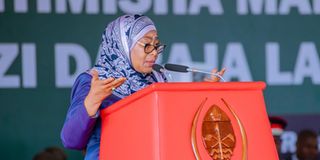
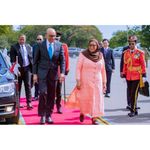
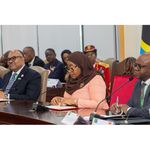
The commission is to be chaired by Court of Appeal Judge Shabani Ally Lila, alongside retired High Court judges Gad John Mjemmas, Awadhi Mohamed Bawazir and Aishieli Nelson Sumari as commissioners
Dar es Salaam. Nearly seven months after Tanzania witnessed one of the most turbulent periods in its recent political history, President Samia Suluhu Hassan has now taken what many observers describe as the most decisive step yet towards establishing criminal accountability over the violence that erupted during and after the October 29, 2025 General Election.
In a move that signals a transition from fact-finding to possible prosecution, the President has appointed a special criminal investigation commission tasked with conducting deeper inquiries into the violence, deaths, disappearances and alleged abuses linked to the post-election unrest.
The newly formed commission, announced yesterday by Chief Secretary Dr Moses Kusiluka, follows recommendations made earlier by the Chande Commission, which spent months gathering testimonies and evidence from across the country.
According to the statement, President Hassan formed the “Criminal Investigation Commission on Violent Incidents During and after the 2025 General Election” under the Commissions of Inquiry Act, Chapter 32.
The commission will be chaired by Court of Appeal Judge Shabani Ally Lila, alongside retired High Court judges Gad John Mjemmas, Awadhi Mohamed Bawazir and Aishieli Nelson Sumari as commissioners.
The appointment marks a critical evolution in Tanzania’s handling of the crisis that left hundreds dead, thousands displaced and triggered widespread concerns over governance, policing and democratic accountability.
For months, pressure had mounted from opposition parties, civil society organisations and sections of the international community demanding that the government move beyond reconciliation rhetoric and pursue actual accountability. The groundwork for this latest development was laid when President Hassan officially received the Chande Commission report earlier this year.
At the time, the President acknowledged the gravity of the findings and indicated that the government would seriously consider the commission’s recommendations, especially those relating to justice, institutional reform and accountability mechanisms.
While the Chande Commission did not publicly identify individuals responsible for killings or destruction, it strongly argued that sustainable justice required a more comprehensive criminal inquiry process grounded in evidence and due process.
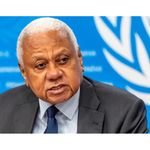
That position later became clearer when Commission chairman Judge Chande Othman met editors and journalists in Dar es Salaam to clarify public concerns surrounding the report.
“Many expected that on the day of presenting the report, the key actors would be named,” Judge Chande said during the meeting.
“But what we stand for is fair accountability.” His remarks came amid criticism from opposition parties including ACT Wazalendo and Chadema, which argued that failing to publicly identify perpetrators risked weakening public confidence in the process.
However, Judge Chande defended the commission’s approach, explaining that the inquiry had deliberately proposed what he described as a three-tier accountability framework.
The first layer focused on individual criminal responsibility, especially those directly involved in unlawful killings or violence.
“For instance, the law is clear that a police officer who causes death using a firearm bears personal responsibility,” he said.
The second layer addressed command responsibility, targeting leaders or commanders who may have known about abuses yet failed to prevent them.
“You cannot simply accuse a commander. You must establish control, knowledge, and failure to act,” he emphasised. The third layer examined institutional accountability, focusing on systemic failures within state institutions and security structures.
Importantly, Judge Chande stressed that the original commission’s mandate was not prosecutorial. “We were not tasked to prosecute or declare anyone guilty. That is not the role of commissions of inquiry, whether in Tanzania or across the Commonwealth,” he explained.
That clarification now appears to have directly informed President Hassan’s latest decision to establish a specialised criminal investigation body capable of pursuing evidence-based inquiries beyond the initial fact-finding stage.
Constitutional and governance analysts say the latest move could become one of the most consequential institutional tests under President Hassan’s administration.
Political analyst, Mr Nicodemus Mwenda, told The Citizen, that the formation of the new commission signals that the government recognises that national healing cannot happen without credible accountability.
“The biggest challenge after any political crisis is balancing justice and stability,” he said.
“If the process is transparent and evidence-driven, it could restore public trust in state institutions. But if people perceive selective accountability, tensions could persist.”
Similarly, legal scholar Dr Abdul Machame, argued that the credibility of the process will largely depend on the independence of investigations and willingness to pursue responsibility at all levels.
“The question now is whether the country is prepared to follow the evidence wherever it leads,” he noted.
“Commissions alone do not deliver justice; institutions must be willing to act on findings.”