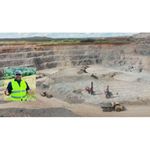
Dar es Salaam. As the global race for critical minerals intensifies, Tanzanian researchers are preparing to tackle one of the country's biggest development questions: how can the nation's vast mineral wealth be transformed into long-term prosperity rather than remaining a source of raw exports?
This question will take centre stage during the 11th Research and Innovation Week at the University of Dar es Salaam (UDSM), where scholars, policymakers, industry leaders and development partners will meet to discuss how strategic minerals can support Tanzania's Vision 2050 and accelerate the country's transition towards a knowledge-based economy.
The three-day event, which begins on June 9, carries the theme: "Harnessing Tanzania's Mineral Wealth to Advance Renewable Energy, Digital Transformation and Societal Security."
According to UDSM Deputy Vice Chancellor for Research, Prof Nelson Boniface's media statement on June 8, 2026, the discussions come at a time when demand for critical minerals is growing worldwide due to the expansion of renewable energy technologies, electric vehicles, digital infrastructure and advanced manufacturing.
"The theme highlights the strategic importance of Tanzania's mineral resources in driving 21st-century development," Prof Boniface said.
He noted that minerals such as graphite, nickel, lithium, cobalt and uranium have become increasingly important in renewable energy systems, while graphite, rare earth elements, copper and gold are essential in supporting digital transformation and emerging technologies.
For Tanzania, the challenge is no longer simply extracting minerals from the ground. The bigger question is how research, innovation and policy can help the country add value, develop local industries and create jobs from these resources.
Experts say countries that have successfully transformed their economies have often invested heavily in research and technology to ensure natural resources become catalysts for industrial growth rather than commodities for export.
This is one of the reasons scholars gathering at the event are expected to examine how Tanzania can strengthen linkages between universities, government and industry to maximise the benefits of its mineral wealth.
The discussions will also focus on how research findings can support evidence-based policymaking and help position Tanzania to compete in emerging sectors linked to clean energy and digital technologies.
University Director of Research and Publication, Dr Mathew Senga, said the annual event has increasingly become a platform through which the university demonstrates the impact of research on society, government and national development.
According to Dr Senga, research conducted at the university has contributed to solving practical challenges facing communities, informed public policy and strengthened the institution's reputation both nationally and internationally.
He said the growing visibility of UDSM research reflects the university's commitment to producing knowledge that directly responds to Tanzania's development priorities.
"Our focus is not only on generating knowledge but also ensuring that research translates into solutions that benefit society, support government priorities and contribute to economic transformation," he said.
The significance of this year's event is further elevated by the participation of Singapore President Tharman Shanmugaratnam, who is expected to deliver a public lecture during the opening day.
For many participants, Singapore's development story offers valuable lessons.
Despite its limited natural resources, Singapore transformed itself from a developing nation into one of the world's most advanced economies through strategic investments in education, innovation, research and human capital development.
Researchers believe Tanzania can draw important lessons from Singapore's experience, particularly in building strong institutions, supporting innovation ecosystems and investing in science and technology as drivers of economic growth.
The public lecture is expected to provide insights into how nations can leverage knowledge, innovation and strategic leadership to achieve sustainable development.
Beyond the lectures and exhibitions, the event will host strategic partnership dialogues bringing together universities, research institutions, government agencies and private sector players to explore ways of commercialising research findings and accelerating value addition in the mining sector.
As Tanzania advances discussions on Vision 2050, many observers view the country's critical minerals as an opportunity to redefine its development trajectory.
However, they argue that the true value of these resources will depend not only on what lies beneath the ground, but also on the quality of research, innovation and policy decisions that determine how the wealth is utilised.
Register to begin your journey to our premium contentSubscribe for full access to premium content