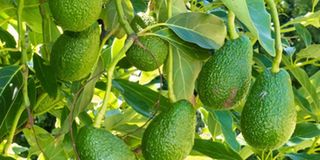
Dar es Salaam. Tanzania has moved to tighten oversight of the fast-growing avocado industry, with the government preparing new measures aimed at improving produce quality, strengthening the value chain, and addressing long-standing disputes between farmers and buyers.
The measures, announced in Parliament in Dodoma yesterday by the Deputy Minister for Agriculture, Mr David Silinde, are expected to improve market transparency and introduce stricter controls on how avocados are bought and graded, following concerns over frequent disagreements between farmers and traders.
Mr Silinde was responding to a question raised by Busokelo Member of Parliament, Mr Lutengano Mwalwiba (CCM), who sought clarification on the government's plans to manage the crop, strengthen oversight of the value chain, and address persistent disputes between farmers and buyers.
Mr Silinde said the Cereals and Other Produce Regulatory Authority (COPRA) continues to oversee the avocado crop and is developing regulations to ensure the production of quality produce while improving market transparency.
The government has also intensified farmer awareness programmes and strengthened extension services through guidelines on cultivation, harvesting, and post-harvest handling.
"There have been challenges in the sector, which prompted the government to issue regulations through a government notice on the management of the avocado crop," Mr Silinde said.
He explained that under the new arrangements, buyers will no longer be allowed to go directly to farms and purchase produce as middlemen, as has been the practice.
"Instead, they will be recognized as agents registered by COPRA and will be required to obtain permits indicating the farmers from whom they are buying.
This will make it easier to regulate transactions and enforce the indicative prices set for each season," he said.
Mr Silinde said the regulations also introduce a grading system under which avocados will be sold according to Grade One, Grade Two, and industrial grade standards.
"Industrial-grade avocados will be sold in special 60-kilogram bags," he said.
He added that in his constituency there are two harvesting seasons and that permits would be closely monitored to ensure grading requirements are properly applied during both periods.
Mr Mwalwiba said one of the major challenges facing farmers is that buyers often visit farms on their own and determine the grades of the produce themselves, a situation that frequently results in disagreements.
"Buyers are the ones deciding the grades, and this has been causing disputes with farmers," he said.
Meanwhile, infrastructure issues were also raised in Parliament. Mkinga MP, Mr Twaha Mwakioja asked when the process of securing a contractor for the construction of the 10-kilometer Maramba Road would be completed.
Kilombero MP, Mr Abubakar Asenga sought an update on the Ifakara-Malinyi road project.
Responding, Deputy Minister for Works, Mr Godfrey Kasekenya, said the Maramba Road falls under the Tanzania National Roads Agency (Tanroads) in the Tanga Region and that a contractor has already been identified.
"The construction contract is expected to be signed by the end of June 2026, after which works will commence," Mr Kasekenya said.
On the Ifakara-Malinyi road, he said a contract had already been signed with a contractor, although implementation had experienced delays. "The government is now in the process of releasing advance payments,” he said.
Register to begin your journey to our premium contentSubscribe for full access to premium content