In Tanzania, the celebrations have become an opportunity to strengthen cultural ties between the two nations
As the rhythmic pulse of drums, song and dance echo across Tanzania's cultural landscape through bands like Msondo Ngoma, another rhythm from across the Mediterranean found its way to Tanzania, bringing with it a cultural feast for the ears.
This year, Italy National Day celebrations in Tanzania did more than mark a national occasion.
They created a bridge between two countries whose identities are deeply rooted in community, storytelling and music.
From the ngoma traditions that have long united Tanzanians to the hypnotic sounds of Pizzica in Southern Italy, the celebration offered a reminder that culture often speaks a language more powerful than diplomacy.
"Music is a universal language," Giorgio Doveri, a member of Officina Zoè, reflected during a chat with The Beat. "Even when people do not understand the words, they understand the emotion."
It is this spirit of connection that has brought one of Italy's most celebrated traditional music groups to Dar es Salaam for this year's Italy National Day celebrations.
Observed annually on June 2, Italy National Day, also known as Festa della Repubblica, commemorates the 1946 referendum in which Italians voted to establish a republic, marking a defining moment in the country's modern history.
Across the world, Italian embassies and cultural institutions use the occasion not only to celebrate national identity but also to showcase the country's rich artistic, culinary and cultural heritage.
In Tanzania, the celebrations have become an opportunity to strengthen cultural ties between the two nations.
This year's programme carried particular significance with the participation of Officina Zoè, a group widely credited with helping revive and popularise the traditional music of Salento, a region in Italy's southern Puglia province.
Giorgio shares that the group was founded in the spring of 1993 by musicians Lamberto Probo, Donatello Pisanello and Cinzia Marzo. The group emerged at a time when traditional Salento music was at risk of fading from mainstream cultural life.
Almost immediately, it became one of the driving forces behind a movement that rediscovered and reintroduced the region's musical traditions to younger generations and audiences around the world.
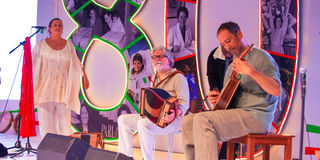
Leading the ensemble is Cinzia Marzo, whose powerful vocals have become one of the defining sounds of the group.
She is joined by Lamberto Probo on percussion, whose mastery of traditional frame drums and tambourines provides the rhythmic heartbeat that drives Pizzica music.
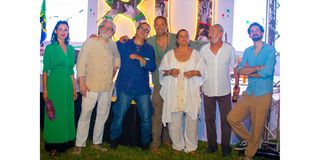
The group's melodic landscape is shaped by Donatello Pisanello on accordion, Giorgio Doveri on violin and mandola, Luigi Panico on guitar and harmonica, and Francesco Probo on guitar.
Together, the musicians create a sound that is at once energetic, hypnotic and deeply rooted in the cultural heritage of Southern Italy.
Each instrument plays a distinct role in the Pizzica tradition. The tambourine establishes the relentless pulse that encourages movement and dance, while the accordion, violin and strings weave melodies that have been passed down through generations.
The result is a musical experience that is both intimate and communal, inviting audiences not only to listen but to participate.
Central to that sound is Pizzica, the energetic musical and dance tradition that has become synonymous with Salento's cultural identity.
“Pizzica traces its roots to centuries-old rituals linked to tarantism, a belief that music and dance could help heal those thought to have been bitten by the taranta spider,” Giorgio explains.
The resulting performances were intense, rhythmic and communal, built around the relentless beat of the tambourine and the movement of dancers who would spin, stomp and sway for hours.
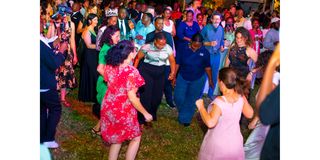
For the guests who were treated to this live performance in Dar es Salaam, Italians in the crowd took to dancing along with the performance, roping in willing guests of all nationalities as they spun and danced in circles.
Over time, what began as a ritual evolved into a powerful cultural expression that remains a defining feature of Salento life today.
For Officina Zoè, preserving Pizzica has never meant freezing it in time.
Instead, the group has spent more than three decades breathing new life into the tradition. Their music combines historical melodies, dialect songs and folk rhythms with original compositions that speak to contemporary audiences while remaining faithful to the language and spirit of Salento's cultural heritage.
Their visit to Tanzania extends beyond a single performance in Dar es Salaam.
Following the Italy National Day celebrations held at the Italian Ambassador’s home in Dar es Salaam, Officina Zoè will have two more shows in Zanzibar as well.
The visit will also include engagements with the Tanzania Academy of Music, creating opportunities for artistic exchange between Italian and Tanzanian musicians.
For a group whose philosophy is rooted in preserving tradition while encouraging cultural dialogue, the collaboration presents a fitting extension of their mission.
“Throughout our career, we have championed the idea that traditional music remains relevant not when it is preserved behind glass, but when it is shared, experienced and passed on to new generations,” Giorgio adds.
The interaction with the academy is expected to offer exactly that, a meeting point between two rich musical traditions separated by geography but connected through rhythm, storytelling and community participation.
Members of the group noted that one of the most rewarding aspects of international travel is discovering how different cultures often share similar artistic foundations.
While the instruments and languages may differ, the role of music in bringing people together remains remarkably familiar.
Their performances in Zanzibar therefore represent more than a concert tour. They serve as a continuation of the cultural conversation that Italy National Day seeks to promote, one built on mutual curiosity, artistic exchange and people-to-people connections.
Italy's current ambassador to Tanzania, H.E. Giuseppe Coppola, hails from Salento, the very region whose music Officina Zoè has spent more than three decades preserving and promoting.
For the band, the invitation is therefore more than another international performance. It is an opportunity to share a piece of home and heritage while strengthening the cultural bonds between Italy and Tanzania.
Giorgio and Lamberto both shared the joy they felt on stage watching the crowds join in the rhythm and dance along.
“Music is the best language to bring people close, no matter how different, and today, we saw how our music and culture are being appreciated here in Tanzania, and that feels good!” Giorgio said.
For Tanzania, the visit offers a rare opportunity to experience not only the music of Italy but also the living heartbeat of Salento itself, one tambourine beat at a time.