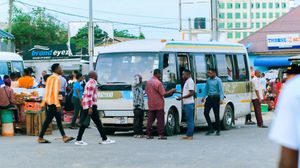
South Africa. Workers stayed home, shops were shut and buses sat idle across South Africa on Tuesday, as demonstrators gathered across the country for anti-immigrant marches that many fear will descend into violence.
Many foreign nationals from elsewhere in Africa stayed away from work, and thousands had already fled ahead of Tuesday's "deadline" set by the demonstrators for all undocumented migrants to leave.
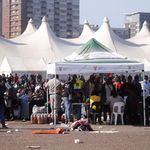
In parts of the main commercial city Johannesburg and the port city of Durban, several dozen protesters, some armed with wooden sticks, gathered.
"People are not working, the jobs are being taken by illegal foreigners. It's not fair," Silindile Xaba, 31, said, among a group of women chanting anti-migrant slogans in central Durban.
Violence against migrants
Migrants have interpreted the deadline as a physical threat. At least five people have been killed in violence since protests began in April, with thousands driven from their homes or seeing their businesses and property vandalised.
In such attacks, which have recurred sporadically in South Africa since 2008, little distinction is made between those who entered legally and those who did not.
The campaign group March and March, run by a former radio presenter behind the latest protests, denies encouraging violence, and says it cannot be held responsible for spontaneous acts of anger by South Africans towards undocumented migrants.
"We are trying to channel that anger towards the government," Jacinta Ngobese told Reuters in an interview two weeks ago.
"Unfortunately, we can't be in every single community telling them ... how to behave. They live with these people."
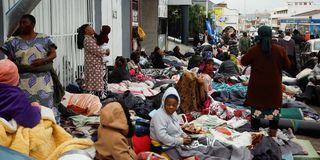
Landlords in Durban and Johannesburg were illegally evicting foreign tenants for fear of their buildings being vandalised, witnesses said.
"All these people, they were chased out by their landlords," said Mabako Majole, a leader of the Congolese community, standing beside around 100 people sleeping rough in downtown Durban. "All these people are legal. They have documents."
Thousands of foreigners are fleeing South Africa as anti-immigrant sentiment surges.
The marches in several cities are expected to draw many thousands of mostly poor or unemployed South Africans who blame foreign nationals for their hardships.
Thousands of police were deployed and military were on standby on an emergency budget of 600 million rand ($36.6 million), a military spokesperson said.
The wave of anti-immigrant sentiment, and what critics say is a failure by police to protect victims, have tarnished South Africa's post-Mandela reputation as a defender of human rights and strained ties with other African nations.
Immigrants are blamed for taking jobs, driving crime and putting pressure on public services — claims that social scientists say lack evidence.
Thirty years since the end of apartheid, South Africa remains unequal, economic growth is slow and a third of people are out of work. Despite this, it remains Africa’s largest economy and continues to draw migrants.
The immigrant population stands at about 3 million or about 4% of the total, according to StatsSA — a relatively low share by global standards.
Vigilantes arrested, political rhetoric hardens
Deputy National Commissioner for Policing Tebello Mosikili said 103 criminal cases had been opened against anti-foreigner vigilantes since March.
"The state has the duty and obligation to ensure that those that are demonstrating do so peacefully," she told a news conference late on Monday.
Some politicians have echoed protesters' concerns even while condemning violence.
"South Africans' ... deep concerns about illegal immigration ... are real and they deserve to be heard," President Cyril Ramaphosa said in a statement on Monday.
"But the right to protest ... does not allow people to threaten or intimidate others, or to engage in acts of vandalism or violence."
South African officials note that Western countries face similar tensions over immigration, often fuelled by divisive politics and misinformation.