EAC unveils regional virus research centre to strengthen health security
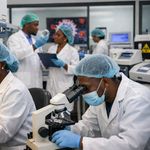
Uganda’s Prime Minister Robinah Nabbanja (centre) joins other officials during the launch of the Uganda Virus Research Institute (UVRI) as the East African Community (EAC) Regional Centre of Excellence in Virology in Entebbe, Uganda, on Wednesday, July 22, 2026. PHOTO | COURTESY
Arusha. The East African Community (EAC) has operationalised its Regional Centre of Excellence in Virology, marking a major milestone in efforts to strengthen the region’s capacity for virus research, specialised laboratory training and disease surveillance.
The facility, hosted by the Uganda Virus Research Institute (UVRI) in Entebbe, Uganda, was officially launched on Wednesday, July 22, 2026, by Uganda’s Prime Minister, Ms Robinah Nabbanja, on behalf of President Yoweri Museveni.
The centre is expected to serve as the region’s leading hub for advanced virology research, laboratory diagnostics, scientific training, disease surveillance and knowledge sharing, enabling EAC partner states to better prepare for and respond to public health threats, including Ebola, Marburg and other emerging and re-emerging viral diseases.
Launching the centre, Ms Nabbanja described the initiative as a significant step towards strengthening regional health security, saying East Africa must continue investing in scientific research and innovation to address evolving disease threats.
“The world is changing rapidly, together with its health challenges. We have learnt that a nation capable of studying its own pathogens is a self-reliant nation. Uganda remains committed to increasing investment in research,” she said.
The EAC Council of Ministers Chairperson, Ms Rebecca Kadaga, said the establishment of the centre came at a critical time when infectious diseases continued to pose serious risks across the region and beyond.
She said lessons from the Covid-19 pandemic demonstrated that diseases do not respect national borders, making regional cooperation essential in preventing and responding to outbreaks.
Ms Kadaga added that although EAC partner states had strengthened their laboratory systems in recent years, disparities in technical expertise, infrastructure and resources remained.
She said the new centre would bridge those gaps by promoting scientific collaboration, specialised training and the sharing of expertise among partner states.
Representing the EAC Secretary General, Deputy Secretary General for Infrastructure, Productive, Social and Political Sectors, Mr Ariik Malueth said the centre was among seven Regional Medical Diagnostic Centres of Excellence identified under the EAC Health Investment Priority Framework 2018–2028, approved by the 19th Summit of EAC Heads of State.
He said the centre would ensure specialised scientific knowledge developed in one partner state became a shared regional resource benefiting all East Africans.
“Uganda’s selection reflects the Uganda Virus Research Institute’s internationally recognised expertise and decades of contribution to virus research, disease surveillance and outbreak response,” he said.
UVRI Director, Prof Pontiano Kaleebu, said the institute was committed to supporting regional health security through cutting-edge virology research, specialised laboratory training, diagnostics, surveillance and scientific collaboration.
He noted that UVRI already played a regional role by confirming laboratory samples submitted by partner states before disease outbreaks were officially declared, ensuring public health decisions were guided by scientific evidence.
The operationalisation of the centre has been supported through the EAC Regional Network of Reference Laboratories for Communicable Diseases Project, with financial support from the German government through KfW and technical assistance from the Bernhard Nocht Institute for Tropical Medicine (BNITM).
Uganda’s KfW country director, Jan Alber, reaffirmed Germany’s commitment to supporting East Africa’s health security, saying stronger laboratory systems and scientific partnerships were essential for building resilient health systems capable of responding to future disease outbreaks.