St Petersburg. Tanzania has put five major strategic projects on the table for international investors as President Samia Suluhu Hassan stepped up efforts to attract foreign capital to support the country's industrialisation and economic transformation agenda.
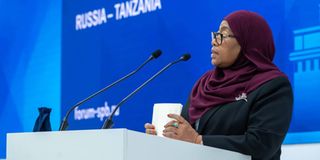
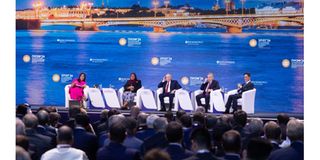
Speaking at the St Petersburg International Economic Forum (SPIEF) on Friday, June 5, President Hassan invited the global business community to partner with Tanzania in key sectors including ports, mining, tourism, fertiliser manufacturing and nuclear energy.
She said Tanzania was implementing reforms aimed at creating a more attractive investment environment, with foreign direct investment (FDI) inflows increasing to about $5 billion in 2025 from nearly $3 billion in 2021.
"At this juncture, allow me to mention five main projects for which we are here to seek partnership from the international business community," she told delegates attending the forum hosted by Russian President Vladimir Putin.
Top on the list is the Bagamoyo Special Economic Zone (SEZ), a flagship project located about 40 kilometres north of Dar es Salaam.
Bagamoyo Port
President Hassan said the project seeks to transform Bagamoyo into a global centre for trade, manufacturing and maritime services.
"We are turning a small historic trade vicinity into a global hub of commerce, manufacturing and maritime sector development," she said.
The government is also seeking investors for the development of the Mangapwani transshipment port in Zanzibar, with feasibility studies for both projects already completed.
Mining beneficiation
The second investment opportunity is in mining and mineral beneficiation.
President Hassan said Tanzania intends to maximise returns from its vast mineral wealth, including gold, uranium, nickel, graphite, helium and niobium, by promoting local processing and value addition.
"Our national policy is clear. We intend to move steadily from being a producer of raw materials to a producer of finished products," she said.
She invited investors to establish processing industries and industrial parks that support mineral beneficiation.
Tourism
Tourism came third in President Hassan's priority areas.
She highlighted Tanzania's growing international profile as a leading tourism destination and announced that Air Tanzania is expected to launch direct flights between Dar es Salaam, Zanzibar and Moscow from July 2 this year.
The government aims to increase the number of Russian tourists visiting Tanzania to 500,000 annually by 2030 and eventually to one million.
Agriculture
Agriculture and fertiliser production constitute the fourth investment opportunity.
President Hassan said Tanzania was prioritising local fertiliser manufacturing to meet growing domestic demand and strengthen food security.
She encouraged international companies to invest in fertiliser plants capable of serving both Tanzania and neighbouring markets.
Nuclear energy
The fifth project focuses on energy generation, particularly nuclear power development.
President Hassan said Tanzania plans to utilise its uranium resources to diversify its energy mix and meet rising electricity demand, projected to reach 8,000 megawatts by 2030 and 70,000 megawatts by 2050.
She said the country has already developed a roadmap for nuclear energy development, including the future use of small modular reactors.
According to the President, discussions are underway with Russia's state nuclear corporation, Rosatom, which has expressed interest in supporting Tanzania's nuclear energy ambitions.
President Hassan used the forum to position Tanzania as an emerging investment destination, citing ongoing investments in transport infrastructure, energy generation and digital connectivity as key drivers of future growth.
"Tanzania is open for business. Tanzania is ready for new ideas and innovation," she said.