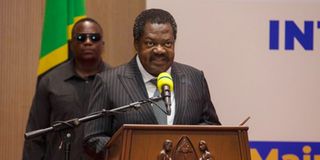
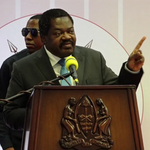
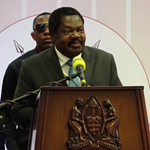
Dar es Salaam. Calls for a new Constitution in Tanzania have gained fresh momentum after Vice-President Emmanuel Nchimbi urged Tanzanians to remain steadfast in pushing for constitutional reforms, a message that has been warmly received by democracy and human rights advocates.
Dr Nchimbi called on Tanzanians to seize what he described as a unique opportunity, saying President Samia Suluhu Hassan has demonstrated the political will to deliver a new Constitution and warning that a future president may not share the same commitment.
The Vice-President made the remarks on Friday, July 24, 2026, during the annual general meeting of the Tanzania Human Rights Defenders Coalition (THRDC).
He said the quest for a new Constitution has taken decades since the reintroduction of multiparty politics, but argued that the time is now right to move the process forward.
Stakeholders express optimism
Speaking after the Vice-President's address, Ms Naishorwa Masago of the Pastoral Women's Council (PWC) welcomed his remarks, saying they had renewed hope that Tanzania could finally adopt a new Constitution.
"The Vice-President's speech highlighted key issues which, if implemented, will strengthen the protection of human rights. It is encouraging to see national leaders recognising the importance of joining citizens in calling for a new Constitution that will provide a stronger foundation for protecting human rights," she said.
The Kioo-Kigoma Facilitators' Association member, Mr Hussein Wamaywa, said Dr Nchimbi's message resonated not only with politicians but also with ordinary Tanzanians, describing constitutional reform as a long-standing public demand.
He said the Vice-President had voiced the aspirations of ordinary citizens who want stronger safeguards for human rights.
"My concern, as a human rights stakeholder, is implementation. Many commitments made at conferences take a long time to materialise. However, because these remarks came from the Vice-President himself, we believe they will be fulfilled," he said.
The Tanzania Child Rights Forum member, Mr Ombeni Kimaro, said the Vice-President's call had come at the right time, noting that there are shortcomings in the current constitutional framework that require reform.
"We recognise the existing gaps and want to see meaningful change. However, we also hope the new Constitution will strengthen the protection of human rights rather than weaken them," he said.
He argued that amendments made to various laws in recent years had narrowed the space for freedom of expression and said the new Constitution should expand the protection of free speech and the right to express opinions.
"We also hope the new Constitution will explicitly recognise children and their rights, while broadening the freedom and right of people to express their views because we have seen those rights diminish," he said.
What Dr Nchimbi said
The Vice-President said one of the most important requirements for a successful constitutional reform process is political will from the country's top leadership, stressing that under Tanzania's current governance system, major national decisions ultimately require the President's approval.
"If there were a way to accomplish this without the President's support, I would simply tell you that since the President wants a new Constitution, you should continue pushing for it. But our circumstances do not allow that. This is something that must be said openly," he said.
"So, President Samia wants this process to move forward. We should seize this opportunity while the President is committed to it. The Criminal Justice Commission she established recommended that the new Constitution should be in place before the 2029 Local Government Elections and the 2030 General Election," added Dr Nchimbi.
He also cited the findings of the Commission of Inquiry chaired by Justice Mohamed Chande Othman, which investigated the violence that occurred during and after the October 29, 2025 General Election.
"That commission recommended that the new Constitution should be in place before 2028 so that it can be used in the 2029 and 2030 elections. Remain steadfast. Let us not wait for a president who does not want a new Constitution. Under the current Constitution, any president may prefer to keep it because it grants excessive powers,” said Dr Nchimbi.
"We must not allow ourselves to end up with a president who has no interest in constitutional reform. Otherwise, we could spend another 50 years searching for a new Constitution. President Samia has shown her commitment, so this is the opportunity we must hold on to. What more should I tell you?" he questioned.
The Vice-President added that if the more than 350 recommendations made by the Criminal Justice Commission, whose implementation President Hassan has directed, are fully implemented, Tanzania will be transformed.
"There are many unnecessary practices taking place, but the President has said they must come to an end. There are many issues, including people being held on remand over minor and trivial offences, and others being denied bail for insignificant offences," he said.
Giving an example, he added: "There are individuals who act maliciously. They know you cannot secure bail over the weekend, so they deliberately ensure you are remanded on a Friday evening so that you spend two days in custody."
In July 2023, the Criminal Justice Commission appointed by President Hassan presented its report containing a wide range of recommendations aimed at reforming Tanzania's justice system and strengthening adherence to the rule of law.
Dr Nchimbi said the President wants human rights defenders to support the implementation of those recommendations, arguing that doing so would make Tanzania a better country than ever before.
"I urge you to leave this meeting knowing that we now have a genuine opportunity to secure a new Constitution before 2030, one that will govern the 2029 Local Government Elections and the 2030 General Election. Once again, I urge you to remain steadfast," he said.
He directed the appeal to members of the ruling CCM, opposition political parties, civil society organisations and human rights defenders, saying a new Constitution would benefit not only the current generation but also future generations.
"A new Constitution is for the benefit of our country. Let us all unite in the struggle to secure one. Once we achieve that, the pace of development and transformation in our country will exceed what many of you imagine," he said.
During his address, Dr Nchimbi quoted President Hassan's remarks made while swearing in judges in May 2026, when she said: "Justice is the foundation of peace."
He said he later thanked the President for making that statement publicly because it provided guidance that all leaders should embrace and uphold.
"Once you become uncomfortable saying that justice is the foundation of peace, you also become reluctant to uphold justice. There is no competition over who should come first. A defender of peace cannot be an enemy of justice, and a defender of justice cannot be an enemy of peace. This is something we must avoid," he said.
Dr Nchimbi said he dreams of a Tanzania where every citizen is proud of their nationality, feels safe and secure, enjoys peace, and is motivated to contribute to the country's development.
"I want a country where we may differ in political ideology, political party affiliation, religion or ethnicity, yet continue to recognise one another first and foremost as Tanzanians. That is the Tanzania I wish to see,” he said.
"I also want a country where, if I meet any activist, I recognise them for their ideas and ability to persuade. If someone sees me talking to activist Maria Sarungi, they should simply say they are discussing matters concerning their country and feel at peace with that," he said.
A long-standing constitutional demand
Dr Nchimbi's remarks add fresh momentum to Tanzania's long-running campaign for a new Constitution.
In the early 1990s, the Nyalali Commission, appointed by former President Ali Hassan Mwinyi, recommended not only the restoration of multiparty politics but also the adoption of a new Constitution.
While the recommendation on multiparty democracy was implemented, the proposal for constitutional reform was not.
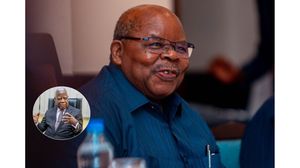
In 1998, President Benjamin Mkapa appointed the Kisanga Committee, chaired by Justice Robert Kisanga, to collect public views on constitutional reforms, while politician Christopher Mtikila continued to pursue legal challenges seeking broader political and electoral reforms.
In 2011, President Jakaya Kikwete established the Constitutional Review Commission, chaired by Justice Joseph Warioba.
The commission gathered public views and prepared a draft Constitution.
However, the process stalled in 2014 after the Constituent Assembly endorsed a proposed Constitution, while the planned national referendum was never held.
Later, the committee chaired by Prof Rwekaza Mukandala also made recommendations aimed at improving the country's electoral and governance systems and reviving the constitutional review process.
In recent years, the Criminal Justice Commission, chaired by Justice Mohamed Chande Othman, together with other stakeholders, has continued to emphasise the need for political and legal reforms, with calls for a new Constitution remaining a central feature of Tanzania's national discourse.
Register to begin your journey to our premium contentSubscribe for full access to premium content