Uzbekistan. Africa faces some of the world's most pressing development and environmental challenges, yet remains severely underfunded.
The continent is grappling with worsening climate shocks, biodiversity loss and environmental degradation, while funding remains far below what is needed to address these challenges.
Experts say blended finance offers a practical mechanism for unlocking billions of dollars needed to support sustainable development and environmental protection.
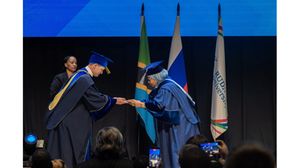
The message emerged strongly during discussions at the Global Environment Facility (GEF) Assembly in Samarkand, Uzbekistan, during a roundtable titled How Can Blended Finance and the Private Sector Bridge the Funding Gap?
Policymakers, investors, development finance institutions and private sector leaders agreed that public funding alone can no longer match the scale of global environmental challenges.
According to the Africa Enterprise Challenge Fund (AECF) Chief Executive Officer, , Ms Victoria Sabula, Africa's small and medium-sized enterprises (SMEs) face a financing gap of approximately $331 billion.
“Fifty percent of SMEs in Africa are credit constrained, while 84 percent are required to provide collateral averaging more than 150 percent of the loan value,” she said.
She noted that many businesses operating in climate-smart agriculture, renewable energy, nature restoration and adaptation projects struggle to access commercial finance because they are often viewed as high-risk investments.
Ms Sabula said blended finance helps address these challenges by combining concessional and commercial capital to reduce risk and create new markets.
Drawing on Africa's renewable energy experience, she said catalytic capital played a key role in supporting off-grid solar companies serving remote communities at a time when commercial investors were reluctant to back unproven business models.
“The ability to de-risk those business models helped build markets that are today sustained by commercial capital,” she said.
She added that blended finance also enables financial institutions to lend to sectors and customer groups they would otherwise avoid, including climate-smart agriculture, irrigation technologies and women-owned businesses that often lack conventional collateral.
The growing financing gap was also highlighted by the United Kingdom’s Special Representative for Climate, Ms Rachel Kyte.
“Every year, the climate and nature finance gap gets bigger,” she said, noting that public resources alone are insufficient to meet investment needs for climate mitigation, adaptation, resilience, and biodiversity conservation.
Ms Kyte described blended finance as the use of public funds to attract private investment into sectors and locations where private capital would not normally invest.
“It is impossible today to think that we can mobilise the scale of investment needed without blended finance,” she said, cautioning that blended finance is not a universal solution.
“It is not a magic potion. It is not a silver bullet,” she said, stressing that public resources, policy reforms and improved access to information remain essential to helping investors understand and manage risks.
Ms Kyte cited the early development of the off-grid solar sector as an example of how concessional finance helped unlock larger private investments.
She recalled how a $50 million GEF-supported initiative financed some of the first off-grid solar projects, generating lessons that later contributed to market growth across Africa and other regions.
Looking ahead, she said blended finance should increasingly focus on emerging sectors, including nature-based solutions and biodiversity conservation, where investment risks remain high and markets are still developing.
The Unit Chief for Biodiversity and Natural Capital at the Inter-American Development Bank, Mr Gregory Watson, said multilateral development banks play a critical role in creating conditions that allow capital to flow into environmental projects.
He said institutions such as development banks work closely with finance and environment ministries to demonstrate the economic value of ecosystems and help governments integrate environmental considerations into economic planning.
Mr Watson also highlighted the role of development banks in structuring financial transactions, setting standards and bringing together governments, investors, conservation organisations and local institutions.
“We can bring together the nature department, the capital markets team and private investment teams to think differently about how we combine financing structures,” he said.
He added that conservation trust funds have become important partners because of their local presence, understanding of community priorities and ability to strengthen transparency and accountability.
Representing Global Affairs Canada, Director General, Ms Cam Do, said blended finance has become an important instrument for mobilising investment in developing economies and sectors where private investors remain reluctant to operate.
She said mobilising private capital is necessary, although it should not be the sole measure of success when evaluating environmental and development programmes.
Ecuador’s Vice Minister of Economy, Ms Patricia Idrobo, shared her country’s experience of linking environmental protection with public finance objectives.
She said Ecuador’s financing initiatives have helped demonstrate that biodiversity conservation and economic development should not be viewed as competing priorities.
“We understood that it is a false dilemma,” she said, adding that nature can be a win-win story.
Ms Idrobo pointed to Ecuador’s efforts to protect globally significant ecosystems, including the Galapagos Islands and the Amazon region, while maintaining sound public financial management.
Participants also discussed the importance of risk-sharing mechanisms, guarantees, concessional funding and policy reforms in attracting private investment into environmental projects.