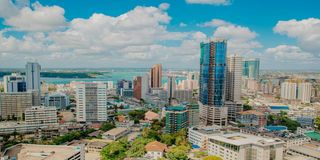
Dar es Salaam. When the World Bank officially reclassified Tanzania from a low-income country to a lower-middle-income economy on July 1, 2020, few may have reflected on how far the country had travelled since 2000, when GDP per capita stood at just $306.
It was during that period that Tanzania Development Vision 2025 was conceived, with the aim of transforming the country into a middle-income nation with a semi-industrialised economy by 2025.
The World Bank groups economies into four income categories — low, lower-middle, upper-middle and high income — based on gross national income (GNI) per capita, which measures total income earned by a country’s citizens and businesses divided by its population.
Tanzania attained lower-middle-income status after its GNI per capita rose to $1,080 in 2019 from $1,020 in 2018. Lower-middle-income economies are classified as those with GNI per capita ranging between $1,036 and $4,045.
As the 2025/26 financial year closes on Tuesday, June 30, attention is now shifting from the achievements and challenges of Vision 2025 to the new Tanzania Development Vision 2050 (Dira 2050), which officially takes effect from today, July 1.
While the Vision 2025 journey has been marked by notable gains, it has also generated important lessons that experts say should shape the country's next phase of transformation.
One of the most significant achievements was Tanzania's early attainment of lower-middle-income status in July 2020, reaching the target five years ahead of schedule.
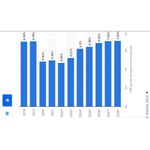
During the period, the economy expanded significantly, with GDP per capita increasing from $306 in 2000 to about $1,277 by 2023. The social impact was equally notable.
Life expectancy increased from 51 years to 68 years, reflecting improvements in healthcare services. Maternal mortality declined sharply, while primary school enrolment rose to almost universal levels.
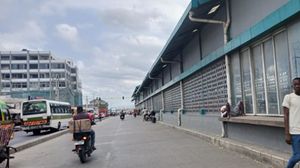
Infrastructure development also accelerated, with paved roads more than doubling and large-scale strategic projects such as the Julius Nyerere Hydropower Project and the Standard Gauge Railway (SGR) taking shape.
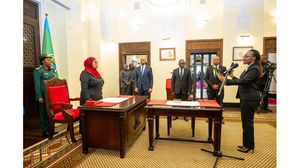
In a recent address, President Hassan attributed the gains to national unity and stability.
"Our peace and unity are the foundation of our strength," she said, describing Vision 2050 as "not just a government plan, but a national covenant for transformation".
Implementation gap
Despite the progress, analysts say several challenges remained unresolved. Experts from the Tanzania Investment and Consultant Group Limited (TICGL) point to what they describe as a "structural transformation deficit".
While the economy recorded strong growth, the manufacturing sector remained relatively stagnant, contributing roughly eight percent of GDP for nearly three decades. At the same time, despite economic expansion, almost one in four Tanzanians still lives below the poverty line.
Policymakers and analysts have also pointed to what they describe as an "effective implementation syndrome".
"Vision 2025 experienced a six-year gap between its announcement in 1999 and the first implementation framework in 2005. That delay likely cost the country substantial economic opportunities," economist Dr Justas Mramba said in an interview.
Minister of State in the President's Office (Planning and Investment), Prof Kitila Mkumbo, recently warned Parliament that planning alone was not enough.
"Translating our vision into action may be an even bigger task than planning itself," he told lawmakers. "We must move away from business as usual because routine approaches will not deliver extraordinary results."
Shifting gears
Analysts argue that for Dira 2050 to succeed, Tanzania must move beyond conventional growth models.
According to TICGL experts, the difference between transformation and stagnation lies not in policy quality alone, but in the discipline of implementation and institutional strength.
The country's youth population is expected to play a central role in the new vision. With more than 55 percent of the labour force aged between 15 and 35, young people are viewed as a key driver of the targeted 10 percent economic growth rate.
However, experts continue to raise concerns over skills gaps, noting that while the labour market increasingly demands advanced technical skills, a large portion of the workforce remains low-skilled.
Dira 2050 sets ambitious targets, including transforming Tanzania into an upper-middle-income industrial economy with a $1 trillion economy and a per capita income of $7,000 by 2050.
To strengthen implementation, the government has revived the National Planning Commission under the President's Office and introduced implementation frameworks, including results-based monitoring systems and communication strategies.
Register to begin your journey to our premium contentSubscribe for full access to premium content