Government assesses fertiliser price surge to shield local farmers
President Samia Suluhu Hassan holds talks with Russian President Vladimir Putin at the Kremlin in Moscow yesterday. Others are Tanzanian and Russian Foreign Affairs ministers Mahmoud Thabit Kombo and Sergey Lavrov. PHOTO | STATE HOUSE
Global market data indicates that the price of urea, a key fertiliser used in agriculture, rose from US$509 per tonne in February this year to US$658 in May
Dar es Salaam. The government is undertaking a detailed assessment of rising global fertiliser prices in a bid to identify measures to protect farmers from escalating input costs while maintaining stable supply across the country.
Despite the price pressures on the international market, authorities have assured farmers that fertiliser remains sufficiently available for the current agricultural season, following concerns that global developments could affect both prices and distribution.
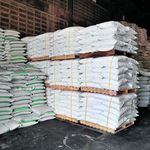
Agriculture Minister Daniel Chongolo gave the assurance yesterday during an inspection tour of fertiliser warehouses operated by major importers, where he reviewed stock levels and distribution systems ahead of the upcoming planting season.
He said the exercise is aimed at ensuring the supply chain remains stable while also determining appropriate interventions to cushion farmers from global price shocks.
“Fertiliser is available and there is no need for panic. We are examining the cost pressures and conducting a nationwide assessment of distribution to ensure the system is functioning effectively,” he said.
Mr Chongolo added that the government is carrying out a comprehensive analysis of global fertiliser price increases to determine suitable policy responses that would ease the burden on farmers.
Global market data indicates that the price of urea, a key fertiliser used in agriculture, rose from US$509 per tonne in February this year to US$658 in May.
The minister attributed the increase to higher fuel costs and disruptions in global supply chains, noting that fertiliser production and transport are heavily dependent on energy prices.
“Given global conditions, it is clear fertiliser prices are likely to rise further because fuel remains a key input in both production and distribution,” he said.
He stressed that the government’s immediate priority is to guarantee availability across all regions, particularly ahead of the next planting season.
“We are prioritising availability. Farmers must have fertiliser when they need it. Once that is secured, we can better address affordability,” he said.
Mr Chongolo said authorities have intensified monitoring of imports and distribution channels to prevent regional shortages and ensure timely delivery to farmers.
He added that the government is considering a range of interventions, including cost-sharing mechanisms, improved supply chain coordination and enhanced price monitoring to protect farmers from excessive costs.
A nationwide stock verification exercise involving importers, distributors and agro-dealers is currently under way to establish accurate data on fertiliser availability and distribution patterns.
The Tanzania Fertilizer Regulatory Authority (TFRA) Director-General Joel Laurent said inspections of major warehouses show that stock levels remain stable, with significant volumes already distributed to various regions.
He said current estimates indicate that the country has sufficient fertiliser in stock, supported by ongoing imports and distribution.
Mr Laurent added that importers are expected to bring in about 300,000 tonnes of fertiliser between July and September, further strengthening supply ahead of the planting season.
He said TFRA has deployed teams across the country to verify stock levels held by both large-scale importers and smaller distributors to ensure accurate national supply data.
The government has also reiterated its long-term strategy to reduce dependence on imports by boosting domestic fertiliser production, with plans to produce about 400,000 tonnes locally out of the 1.5 million tonnes required annually.
Yara Tanzania Limited Head of Finance January Fabian said that despite global market challenges, fertiliser supply is expected to remain stable and sufficient to meet domestic demand.