Dar es Salaam. The government has called for stronger collaboration between public institutions, civil society organisations and communities to address rising cases of child abuse, neglect and exploitation.
Officials said protecting children’s rights requires joint efforts involving parents, communities, human rights defenders and development partners to ensure children grow up in safe and supportive environments.
Social Welfare Officer at the Institute of Social Welfare, Mr Zachayo Shigongo, said child protection was a shared responsibility that required coordinated action from different stakeholders.
“Child protection is a fundamental responsibility that must be carried out properly. That is why the government has continued to involve stakeholders from different sectors. It is now your responsibility to complement these efforts so that together we can secure the future of our children,” he said.
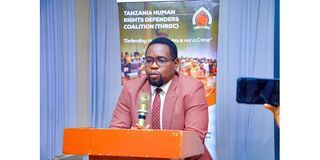
Mr Shigongo was speaking on Thursday during a one-day training workshop on strengthening the capacity of grassroots civil society organisations and human rights defenders to monitor, document, report and advocate for child rights protection in Tanzania.
The training, organised by the Tanzania Human Rights Defenders Coalition (THRDC) in Dar es Salaam, brought together 60 participants from child protection organisations across Mainland Tanzania and Zanzibar.
Mr Shigongo said the government remained committed to working with child development stakeholders to ensure children’s protection and wellbeing remained central to national development.
He said effective referral systems were important in ensuring children facing abuse or neglect receive timely protection and support.
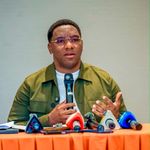
During the workshop, THRDC National Coordinator Advocate Onesmo Olengurumwa urged child rights advocates to strengthen their understanding of national laws and international conventions governing children’s rights.
He said knowledge of legal frameworks would enable organisations to effectively monitor violations, document cases and hold responsible authorities accountable.
A representative from the University of Dar es Salaam School of Law, Dr Veronica Buchumi, said children require different approaches depending on their circumstances, particularly when accessing justice and protection.
Speaking on legal frameworks for child rights protection and juvenile justice, Dr Buchumi said children who interact with the justice system should not be treated as one group.
“There are children who have committed offences, those who are victims of abuse, children with special needs and those who witness violence against other children. Each category requires a different response to ensure justice is delivered in a manner that protects their rights and best interests,” she said.
Dr Buchumi encouraged participants to familiarise themselves with the Law of the Child Act, 2009, as amended in 2025, describing it as the main legislation governing child protection and welfare in Tanzania.
She said the law provides guidance on issues including child custody, adoption, child labour and parental responsibilities.
“The law makes it clear that the responsibility of caring for and protecting a child rests with both parents, not just one. Understanding these provisions is crucial for everyone working in child protection,” she said.
Participants said the training had improved their knowledge and advocacy skills, which would help strengthen child protection initiatives in their communities.