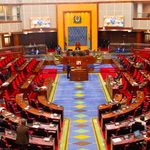
Dar/Dodoma. Ministers have responded to queries by Members of Parliament (MPs) during debate on the government’s Sh62.3 trillion 2026/27 budget, addressing concerns ranging from infrastructure financing and population growth to health sector reforms, information communication technology (ICT) expansion, and wildlife management.
Their contributions closed several discussions, including the Serengeti International Airport project and ongoing reforms in the ports sector, while also clarifying the use of development loans in infrastructure delivery.
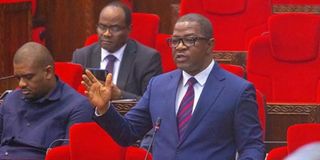
Speaking on Monday, June 22, 2026, Works Minister Abdallah Ulega said development loans have been channelled directly into strategic infrastructure projects, dismissing claims that borrowed funds are not reflected in tangible developments.
He said all loans obtained have been used for roads, airports, and related transport infrastructure under his ministry.
Mr Ulega cited upgrades and expansion works at Tabora, Shinyanga, and Sumbawanga airports, as well as ongoing projects in Kigoma, Tanga, and Manyara.
“There is nothing borrowed that has not been used for development in roads and airports under the Ministry of Works,” he said.
He also pointed to Msalato International Airport in Dodoma, saying it is among the flagship projects financed through such loans.
Beyond aviation, he said, funds have supported strategic road works in Kigoma, Kasulu, and southern regions, alongside bridge upgrades aimed at improving connectivity and freight movement.
He added that the government is expanding public-private partnerships (PPPs) to accelerate infrastructure delivery and ease pressure on public finances.
Several strategic roads, he said, have already been earmarked for implementation under PPP arrangements.
Mr Ulega urged the public to dismiss claims questioning loan utilisation, insisting that results are visible nationwide.
“These loans are what have made it possible for citizens to see and use these projects every day,” he said.
Health sector as an economic driver
Health Minister Mohamed Mchengerwa said the health sector should no longer be viewed solely as a cost centre, but as a driver of economic growth, industrialisation, and employment.
He said national development requires collective responsibility beyond government alone, stressing discipline, productivity, tax compliance, and patriotism.
Mr Mchengerwa said the ministry is promoting local production of medicines, equipment, reagents, and vaccines to reduce import dependence.
He warned that overreliance on imports exports jobs, technology, and tax revenues.
“We want health funds not to circulate only within hospitals. They must create industries, jobs, protect foreign exchange, and increase national income,” he said.
He added that expanding domestic pharmaceutical production would improve medicine availability, reduce import bills, and create jobs for young people.
According to him, despite global economic pressures, Tanzania’s economy remains resilient and urged citizens to remain confident and supportive of national leadership.
Population growth and skills
Education Minister, Prof Adolf Mkenda, warned that population growth could become either a national asset or a burden, depending on skills development and education outcomes.
He said education reforms are needed to equip young people with skills aligned with technological change and globalisation.
Prof Mkenda cautioned that without adequate skills, population growth could strain development goals, including Vision 2050.
He said Vision 2050 views population growth as a potential driver of development if properly harnessed.
He stressed the need for sustained investment in skills development up to 2050, noting that job demand will rise as more graduates enter the labour market.
“If we do not create enough jobs and skilled people, population growth will become a curse. With proper planning, it is a great opportunity,” he said.
He added that ongoing reforms aim to align learning with practical skills and employability.
Kilwa fisheries port near completion
Livestock and Fisheries Minister, Dr Bashiru Ally, said construction of the Kilwa Fisheries Port has reached 99.9 percent completion, with equipment testing expected next week.
He said the Sh280 billion facility, expected to be inaugurated between August and September by President Samia Suluhu Hassan, will be the first fisheries port in East Africa.
The project is expected to boost fish processing, transport services, and marine tourism.
Serengeti airport debate
Transport Minister, Prof Makame Mbarawa, defended the government’s decision to construct Serengeti International Airport, saying the project is aimed at boosting tourism and improving access to the national park.
He said the facility aligns with global tourism infrastructure standards and will enhance visitor experience.
The project has sparked debate among MPs, with some suggesting expansion of Mwanza Airport as an alternative.
ICT infrastructure expansion
ICT Minister Angellah Kairuki said the government is strengthening digital infrastructure to improve revenue collection and reduce leakages.
She said Sh229 billion has been allocated for the construction of 287 communication towers in border areas and along the Standard Gauge Railway (SGR), as well as upgrading 304 existing towers.
She added that 186 kilometres of the national ICT backbone will be extended to connect the Democratic Republic of Congo and 17 districts currently without fibre connectivity.
Wildlife population debate
Natural Resources and Tourism Minister Dr Ashatu Kijaji said the government will launch a national debate on the rising populations of wildlife, including lions.
She also said the ministry is preparing a documentary showcasing tourism achievements under President Samia Suluhu Hassan.
Reported by Habel Chidawali (Dodoma), Juma Issahak, and Herieth Makwetta (Dar)