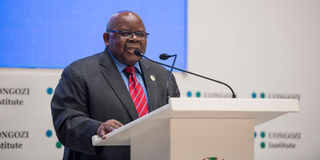
Dar es Salaam. When Benjamin Mkapa became Tanzania’s third president in 1995, he inherited an economy facing severe challenges, including low government revenues, high inflation and heavy debt.
Government revenue stood at only Sh331 billion in the 1994/95 financial year, while delayed salary payments for civil servants were common. Inflation had reached 27.4 percent, according to Mr Mkapa’s autobiography, My Life, My Purpose: A Tanzanian President Remembers.
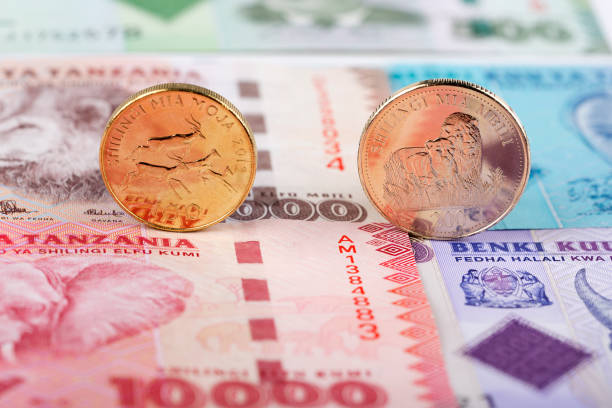
Ten years later, when he left office in 2005, revenue collection had risen to Sh2.125 trillion, foreign exchange reserves were enough to cover 5.3 months of imports and inflation had fallen to single digits.
Economic analysts say the transformation was driven by reforms introduced during Mr Mkapa’s administration, including strengthening public institutions, improving revenue collection, attracting investment and restoring confidence among international partners.
Associate Prof of Development Economics at the University of Dar es Salaam-Dar es Salaam University College of Education (UDSM-DUCE), Abel Kinyondo, described Mr Mkapa as a key figure in establishing institutions that continue to shape Tanzania’s economy.
“Mkapa, the father of Tanzania’s economy, established many of the country’s key institutions. He established the Tanzania Revenue Authority (TRA), which has now been in existence for 30 years and the Prevention and Combating of Corruption Bureau (PCCB), among many others,” he said.
Prof Kinyondo said Mr Mkapa took over when the economy was struggling but managed to restore confidence among investors and development partners.
“When Mkapa came into power, the economy began to improve. We regained the confidence of other countries and had our debts forgiven. He left office with manageable debts and brought investors into the country,” he said.
A major part of Mr Mkapa’s economic strategy involved rebuilding relations with international financial institutions, including the World Bank and the International Monetary Fund (IMF).
In his autobiography, Mr Mkapa acknowledged that engaging with the two institutions was politically sensitive because they were viewed negatively by many Tanzanians and Africans due to their economic reform policies.
“It was not easy… because these two organisations were the bête noires to many Tanzanians, indeed Africans. Nevertheless, these working relationships were vital if I was going to get our economy on a stronger footing,” he wrote.
Mr Mkapa held discussions with then World Bank President James Wolfensohn and IMF Managing Director Horst Kohler, while also seeking support from countries including the United Kingdom, China, the Netherlands, Norway, Sweden, Denmark, Finland and Germany.
He also personally engaged then US President Bill Clinton over Tanzania’s application for debt relief. The efforts contributed to Tanzania receiving $3 billion in debt relief in 2001, reducing external debt by 54 percent.
Independent financial analyst Oscar Mkude said Mr Mkapa’s administration created economic institutions that remained relevant beyond his presidency.
“Mkapa helped build economic institutions that remained in place even after his term ended,” he said. Mr Mkude said the former president inherited a difficult economic situation but succeeded in restoring public confidence. However, he noted that some reforms, including restrictions on public-sector employment, made Mr Mkapa unpopular among some groups. “He was not popular in terms of employment because he did not employ a large number of people during his time in office,” he said.
Chief Executive Officer of the Institute of Management and Entrepreneurship Development, Dr Donath Olomi, said Mr Mkapa laid the foundation for economic reforms that shaped Tanzania’s market-based economy.
“Mkapa laid the foundation for the development we have achieved. When he came into power, he developed a vision for sustainable industrial development and introduced policies that promoted fair competition,” he said.
Dr Olomi credited Mr Mkapa’s administration with strengthening institutions such as the Fair Competition Commission, improving weights and measures systems, and promoting private sector participation.
“He established the foundations of a free market, strengthened discipline within government, and introduced competition in the appointment of directors in ministries,” he said.
As Tanzania works towards achieving its Development Vision 2050 goals, analysts say maintaining strong economic institutions and accountability will be essential to building on the foundations established during Mr Mkapa’s presidency.
Mr Mkapa died on July 24, 2020, but economists say many of the reforms introduced during his tenure continue to influence Tanzania’s economic direction.
Register to begin your journey to our premium contentSubscribe for full access to premium content