Dar/Zanzibar. A heated exchange between Tanzania’s National Assembly and the Zanzibar House of Representatives has exposed growing tensions over Union matters, prompting warnings from some legislators that the rhetoric could undermine national cohesion and threaten the Union itself.
During budget deliberations, several MPs cautioned that remarks made by some Zanzibar ministers were divisive, inflammatory, and capable of weakening the Union.
They urged Zanzibar President, Dr Hussein Ali Mwinyi, to publicly condemn the statements.
On the Zanzibar side, members of the House of Representatives insisted they would continue defending Zanzibar’s interests within the Union, despite accusations that some of their comments were discriminatory.
The debate follows remarks made at different times by ministers in the Revolutionary Government of Zanzibar (RGZ), which some observers have interpreted as discriminatory towards non-Zanzibaris.
Speaking in the House of Representatives on June 6, 2026, acting Zanzibar Minister for Health, Dr Saada Mkuya Salum, questioned the growing number of non-Zanzibaris seeking treatment in Zanzibar through the Matibabu Card scheme, which is reserved for Zanzibaris.
She stressed that Zanzibar’s budget stands at Sh8 trillion and cannot shoulder healthcare costs for a population of 60 million people.
The remarks sparked widespread debate, particularly among mainland Tanzanians who viewed them as discriminatory.
However, clarifying her remarks in a television interview, Dr Mkuya said Zanzibar’s budget could not sustain healthcare costs for large numbers of people.
She added that the government had put in place mechanisms allowing others to contribute to improving health services on the islands, while some mainland residents access care through health insurance schemes.
She added that the Zanzibar Health Services Fund (ZHSF) provides services to any registered member, including those from mainland Tanzania.
Separately, Deputy Minister for Youth, Employment and Empowerment, Mr Hassan Hamis Hafidh, popularly known as Diaspora, said during debate on his ministry’s budget that Zanzibar has 1,184 registered hotels, yet most workers in the sector are not locals.
He said his ministry’s responsibility is to ensure that Zanzibaris secure a greater share of employment opportunities in the tourism industry.
His remarks also generated controversy, with some interpreting them as discriminatory towards non-Zanzibaris.
He added that during a visit to a hotel employing 156 workers, only 27 were Zanzibaris.
The goal, he said, was to ensure that most employees in such establishments are locals, while a smaller number come from outside Zanzibar.
Clarifying his remarks, Diaspora said he was responding to concerns raised by representatives questioning why many tourism jobs were not benefiting local people.
He attributed the situation to a perception among some young people that government employment offers greater benefits than private-sector jobs.
He added that many youths believe private-sector employment provides less freedom than working for the government.
He said his ministry’s role is to change that mindset so that Zanzibar’s young people can take advantage of opportunities available in the private sector, many of which are currently occupied by non-locals.
MPs issue warnings
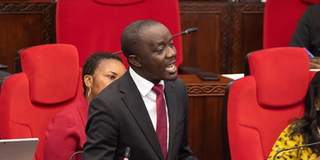
The remarks prompted Geita Rural MP Joseph Kasheku, popularly known as Musukuma, to urge President Mwinyi to condemn what he described as dangerous and discriminatory statements by Zanzibar ministers, warning that they posed a threat to the Union.
Speaking during the budget debate on Tuesday, June 16, 2026, Musukuma said statements made by ministers are often viewed as official government positions and should therefore be carefully considered.
He said the Union was no longer the “soil-mixing” Union established by founding fathers Mwalimu Julius Nyerere and Abeid Amani Karume, but had instead evolved into a “blood Union”.
“In Geita, three-quarters of miners come from Zanzibar. We treat them and feed them, but we have never spoken to them in that manner. If it is about sato or sangara fish, then let them also bring kwerekwere so it can be improved,” he said.
“I am a member of the NEC (National Executive Council) of CCM. I am elected in both Zanzibar and mainland Tanzania. We inherited this Union. The President of Tanganyika and the President of Zanzibar mixed soil; we have gone further and mixed blood. I urge our colleagues, when contributing, to speak about Tanzania. Ministers should be careful with their words,” he said amid applause from MPs.
Tarime Rural MP, Mr Mwita Waitara, said those opposing the Union established by the founding fathers were people who had “eaten, become full and overfed” and should not be tolerated.
“We will protect our Union with all our strength. We will protect Mama Samia (President Samia Suluhu Hassan) with great loyalty and no one can destroy or destabilise this Union. If someone has been sent to do so, they will fail,” he said.
He added that attempts to destabilise the Union should not be tolerated, although such individuals exist on both sides of the Union and should be ignored.
Mr Waitara, a former Deputy Minister in the Vice President’s Office responsible for Union Affairs and Environment, said anyone referred to as “Judas”, as allegedly stated by Zanzibar Representative, Mr Simai Mohammed Said, should be publicly identified.
“People are intoxicated by words as if they are overfed, but some statements are creating division. I say those who have been sent must be condemned. If someone says there is a Judas here, who is that Judas? He must be named. We will not accept divisive statements,” said Mr Waitara.
He added that MPs should not be treated as careless people on serious matters affecting educated citizens, urging those allegedly sending such individuals to stop immediately, saying they would not succeed.
Representatives defend position
Meanwhile, some members of the Zanzibar House of Representatives said they would continue defending Zanzibar’s interests within the Union, even if their remarks were sometimes interpreted as discriminatory.
Speaking during the budget debate on June 16, 2026, they said that if defending Zanzibar’s interests was considered discriminatory, there would be no reason to continue the Union.
Ziwani Representative, Mr Mohamed Ali Salim, ACT Wazalendo, said: “Even the few jobs available are taken by our colleagues from the other side. If we speak, it is said we are opposing the Union, but if defending our youth’s employment is considered a threat to the Union, then let it collapse.”
“As for me, as the Ziwani representative, I will continue to defend and advocate. If this is the reason the Union should collapse, then let it collapse, because the jobs I am demanding are legitimate under the Zanzibar Constitution, even though interpretations differ,” he said.
Women’s Special Seats Representative, Ms Chumu Kombo Khamis, CCM, said the Union would not collapse and would continue to be protected because of the family ties linking citizens on both sides.
“The Union will be protected. It will not die because our relatives are there and mainland Tanzanians are here in Kahama, Sumbawanga, and elsewhere, living their normal lives,” she said.
Women’s Representative, Dr Nasra Nassor Omar, ACT Wazalendo, said numerous concerns had emerged, particularly regarding employment in Zanzibar, which is often dominated by non-locals.
She said the budget contained gaps and did not adequately reflect Zanzibar’s constitutional and Union status, arguing that discussions should not focus solely on numbers but also on political, economic, and social realities.
“For four budget years, Zanzibar has not had sufficient capacity within the Union structure. Its economy has not been designed in a way that allows it to be self-reliant without depending on the Union,” she said.
Health card debate
Commenting on the controversy surrounding healthcare access and insurance benefits for Zanzibaris, Dr Omar said such debates reflected broader social development issues.
She said allegations that Shehas were improperly issuing Zanzibar Resident IDs lacked evidence, noting that there had previously been reports that the IDs were strategically issued to non-residents for electoral purposes.
She said the issuance of Zanzibar Resident IDs (ZAN ID) had become politicised.
“People thought that if you do not have a ZAN ID, you cannot vote, but those who were given IDs for voting are now the same ones complaining,” she said.
“They want the Matibabu Card. It is not wrong for someone from outside Zanzibar to seek treatment. If you used them during elections, you should not complain now that the system is unfair,” she added.
Register to begin your journey to our premium contentSubscribe for full access to premium content