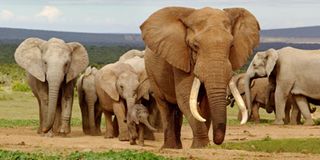
Arusha. Tanzania, once among Africa’s leading elephant strongholds, has recorded a sharp decline in its elephant population over the past 20 years, according to the new findings of the National Wildlife Census 2024/2025.
The census shows that elephant numbers have fallen from more than 134,000 in 2005 to 66,714 currently, reflecting long-term pressure from poaching and human-driven environmental change.
A report released in Arusha on Thursday, June 17, 2026, by the Tanzania Wildlife Research Institute (Tawiri) indicates that Tanzania now ranks third in Africa in elephant population, behind Botswana, with about 130,000 elephants, and Zimbabwe, with around 100,000.
Speaking during the census findings launch, Tawiri director general, Dr Eblate Mjingo, said the data provides a clearer picture of wildlife trends across major ecological systems and highlights both progress and continuing challenges in conservation.
“While Tanzania has made gains in restoring several wildlife species, elephants remain under sustained pressure from historical poaching and ongoing human-induced factors,” he said.
The Tanzania National Parks Authority (Tanapa) conservation commissioner, Mr Musa Kuji, said the primary driver of the decline was intense poaching in the early and mid-2000s, fuelled by the illegal ivory trade, particularly in major ecosystems such as Selous and Ruaha.
He added that expansion of human settlements, agriculture and infrastructure near protected areas has further worsened the situation by fragmenting habitats and disrupting elephant movement patterns.
“Habitat fragmentation has become one of the greatest threats to elephant conservation, as it restricts migration corridors and limits access to water and pasture, especially during the dry season,” he said.
Parliamentary Standing Committee on Land, Natural Resources and Tourism Chairperson, Mr Timotheo Mnzava called for a national dialogue on strategies to reverse the decline and restore Tanzania’s elephant population.
He said the drop from over 134,000 elephants in 2005 to 66,714 currently underscores the need for stronger conservation measures to restore the country’s historic status as a major elephant stronghold.
“While we celebrate the achievements in wildlife conservation reflected in this census, we must also begin a national conversation on how to restore the elephant population lost over the past two decades due to poaching and other challenges,” he said.
Representing President Samia Suluhu Hassan, the Minister for Natural Resources and Tourism, Dr Ashatu Kijaji, said Tanzania had made notable progress in wildlife protection, reflected in rising tourism revenues from about $3.9 billion previously to around $4.4 billion currently.
“The decline in elephant numbers required renewed focus on conservation, including stronger enforcement and coordinated restoration efforts,” said Dr Kijaji.
She echoed calls for a national dialogue on restoring elephant populations to historic levels, including those recorded in 2005.
Tanzania Wildlife Management Authority (Tawa) conservation commissioner, Mr Mlage Kabange, said a coordinated national strategy was needed to address remaining gaps, particularly poaching, human–wildlife conflict, and habitat degradation.
He said encroachment into wildlife corridors and protected areas continued to undermine conservation efforts.
“There is still encroachment on wildlife corridors and protected areas. If we are to restore declining species, ecosystems must be allowed to function naturally, even as human populations grow,” he said.
Despite the decline in elephants, Tanzania continues to rank highly in other wildlife populations.
Tawiri says the country hosts about 328,000 buffaloes, the highest number in Africa, followed by South Africa, Mozambique, Kenya, and Zambia.
It also leads in lion populations, with an estimated 17,200 lions, ahead of South Africa, Botswana, Kenya, and Zambia.
Dr Mjingo said the 2024/2025 census was conducted 10 years after the previous survey in 2014/2015 and, for the first time, covered all ecological systems across the country.
The findings also show Tanzania has about 302 black rhinos, ranking fifth in Africa behind Namibia, South Africa, Zimbabwe, and Kenya.
Register to begin your journey to our premium contentSubscribe for full access to premium content