Why Tanzania’s pharmacists are warning against self-medication and incomplete treatment
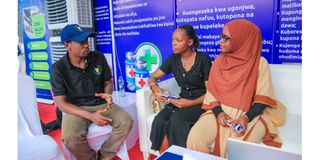
Senior Pharmacist at the Pharmacy Council (PC), Mr Amour Iddi (left), provides health education to stakeholders attending the Pharmacy Week exhibition in Dar es Salaam. The event also featured public awareness and educational activities aimed at promoting safe and informed use of pharmaceutical services.
Dar es Salaam. Tanzanians have been urged to stop self-medicating, complete prescribed doses and avoid sharing medicines with others, as pharmacists warn that improper use of drugs is contributing to growing resistance to treatment.
Speaking during Pharmacy Week celebrations in Dar es Salaam, Pharmacy Council Eastern Zone Coordinator Mr Tumaini Makole said misuse of medicines remains a major public health concern, with many people taking drugs without first establishing the cause of their illness.
He said patients should seek professional medical advice, undergo the necessary tests and use medicines strictly as prescribed.
According to Mr Makole, taking medicines without a proper diagnosis can encourage disease-causing organisms to develop resistance, reducing the effectiveness of treatment and making illnesses harder to manage.
“Patients should first consult healthcare professionals, undergo tests and receive the correct medication. Equally important is using medicines exactly as instructed,” he said.
He noted that one of the most common mistakes is discontinuing treatment once symptoms improve.
“You may be instructed to take medicine every eight hours for five days, but after three days you start feeling better and stop. That is what we call improper use of medicines,” he said.
Mr Makole stressed that medicines prescribed for one person should never be given to another, even if they appear to have similar symptoms.
“There is a tendency among some people to keep leftover medicines and give them to relatives or friends when they fall ill. That is dangerous. The person who is unwell should seek medical advice and receive appropriate treatment,” he said.
The awareness campaign forms part of Pharmacy Week activities, which began on June 10 and will conclude on June 16 under the theme, “Pharmacy Unlocking Vision 2050 in the Health Sector.”
Mr Makole said pharmacists occupy a strategic position in the implementation of Tanzania’s Development Vision 2050 because they are involved throughout the medicines supply chain, from production and distribution to ensuring medicines are used safely and effectively by patients.
“When we say pharmacy is key to Vision 2050 in the health sector, we are recognising the central role pharmacists play in delivering quality healthcare and ensuring medicines achieve their intended purpose,” he said.
Members of the public attending the exhibition also called for intensified awareness campaigns on the proper use of medicines.
Mbezi resident Mr Justin Shaban said many people still lack adequate knowledge about the importance of completing treatment.
“There are people who fail to finish medicines prescribed by healthcare professionals. After some time, the illness returns and can be more severe. Continued public education is therefore essential,” he said.
According to the Ministry of Health’s 2026/27 Budget Estimates, the Pharmacy Council is responsible for regulating the pharmacy profession, supervising pharmaceutical practice, licensing medicine outlets and educating the public on the proper use of medicines.
The Council currently recognises 15,943 pharmaceutical professionals, including 4,256 pharmacists, 10,512 pharmaceutical technicians and 1,175 assistant pharmaceutical technicians.
The ministry’s report further shows that 487 additional pharmaceutical premises have been registered, bringing the total number of licensed outlets across the country to 3,718.
During the reporting period, 8,788 pharmaceutical professionals participated in continuing professional development programmes, while 17 training modules were approved to strengthen standards within the sector.