How Tanzania’s clean cooking drive is reshaping LPG investment
By Hussein Boffu
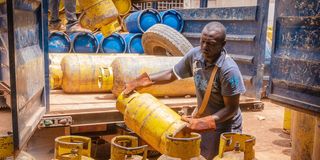
Tanzania is at the centre of one of East Africa’s most consequential energy transitions. Some 77 percent of Tanzanians still cook with firewood and charcoal, linked to three to four million respiratory illness cases annually — a burden borne disproportionately by women and children.
The government’s response, the National Clean Cooking Strategy 2024–2034, is reshaping the commercial logic of Tanzania’s LPG sector and opening a $1 billion-plus market to investors, operators, and NGOs alike.
Infrastructure-heavy sectors like LPG depend on long planning horizons, and investors have historically hesitated without clear government direction.
By formally naming LPG as central to the clean cooking transition, Tanzania has removed that uncertainty — making import terminals, storage depots, and distribution networks commercially justifiable. Rapid urbanisation and rising middle-class incomes add momentum:
LPG imports jumped 38 percent in a year, from 293,167 to 403,638 tonnes, while per-capita consumption — just 2.6 kg against a 10 kg target by 2033 — shows that the market is only beginning its growth curve. The pattern is familiar: when government commits, private capital follows.
PAYG via mobile money: The smart cylinder frontier
The Strategy’s most transformative element is its explicit mandate for Pay-As-You-Go (PAYG) cooking appliances nationwide — not a pilot, but binding policy. PAYG lets households pay Sh500–Sh2,000 daily via M-Pesa or Airtel Money instead of funding a full cylinder refill upfront, with smart meters releasing gas in line with payment.
This dismantles LPG’s biggest adoption barrier — the unaffordable Sh35,000–Sh45,000 refill — unlocking the Base of Pyramid segment. With over 35 million mobile money accounts already active, the payment rails exist; LPG is simply the missing application.
Institutional demand: The bulk liquid opportunity
A government directive now bans charcoal and firewood in any private institution serving over 300 meals daily — creating a captive market of schools, hospitals, hotels, food factories, flower farms, breweries, mining camps, and safari lodges.
The commercial model here differs: bulk liquid LPG delivered by tanker to on-site storage, under long-term contracts with fixed pricing and monthly invoicing.
The REA’s 453-institution programme of government schools and hospitals stands out as an effectively government-guaranteed revenue pipeline for operators who secure supply agreements.
Green finance is following the policy
Clean cooking sits squarely within DFI mandates — climate resilience, public health, and the UN SDGs. UNCDF’s CookFund Tanzania, IFC, AfDB, and local banks such as CRDB and NMB are actively financing projects in 2026.
PAYG models that demonstrably reduce biomass use can also access carbon credits — at $8–$15 per tonne CO2 avoided, a network serving 50,000 households could generate hundreds of thousands of dollars in additional annual revenue.
The caveat: DFIs require rigorous, bankable feasibility studies with primary demand data and stress-tested financials — weak feasibility work remains the most common reason promising projects fail to secure financing.
Regulation is maturing — and that’s a good sign
The Energy and Water Utilities Regulatory Authority (Ewura) is tightening safety, licensing, and cylinder certification standards. While this raises compliance costs, it also reduces informal competition and builds consumer trust — conditions serious investors prefer, and a cost worth building into feasibility models from the outset.
A new frontier: Digitised camp services for mining
Tanzania’s mining sector — Barrick Gold’s Twiga Minerals, Kabanga Nickel, Shanta Gold’s New Luika and Singida sites, and state miner Stamico (Stamigold, Ngaka Basin coal, graphite, and the new Kigosi gold project) — shares a common gap: large remote workforces served by fragmented, cash-based fuel, payroll, and accommodation systems.
The opportunity is a single digitised contract covering everything outside the pit — PAYG LPG fuel, mobile money payroll, attendance, and accommodation. For Stamico, operating under a “Decent Work” mandate, this directly supports financial inclusion goals; for foreign operators, it converts hidden costs into transparent, predictable expenditure.
Tanzania’s National Clean Cooking Strategy is reshaping investment reality — improving demand predictability, mandating digital payment integration, and unlocking institutional finance. From PAYG household distribution to bulk institutional supply, carbon credits, and digitised mining camp services, LPG in Tanzania is now a structured clean energy market with a decade-long policy runway.
Investors who move now, with credible feasibility work and digitally integrated models, will secure positions difficult to replicate once the window closes.
Hussein Boffu is a consultant specialising in feasibility studies, strategic advisory and project execution for the energy sector.