Of MUTUAL benefit to BOTH SIDES; it’s HIGH time banks LOWER rates
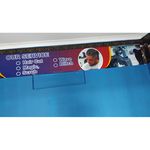
We came across this one somewhere in Tegeta, Dar es Salaam. Our photographer was initially attracted by the naughty “message” before he took note of the grammatical mess. “Job” is a singular noun, so it should be described by a singular verb: Your job ATTRACTS… (not attract…). Trust signwriters! PHOTO | AMS
Writing for an audience that views you as a linguistic role model poses a serious challenge to us, men and women of the press. It means we cannot be too careful.
You may be easily pardoned by your associates in a WhatsApp group irrespective of the recklessness and semi-literacy you display. Why, what you share in your group is considered a “household” matter.
Scribbling for a mass communication outlet is, however, something else. One has to pay to pick up your paper at the newsstand. For that reason alone, one expects from you, not just a good story, but also blameless language.
So, esteemed scribbler, read and re-read you script even as you pray that your editor will go through it with a fine toothcomb and sort out the errors you make, either due to your limitedness or oversight.
Having thus lectured (bah!), we’ll now proceed with sharing linguistic gemstones picked up over the week. Here we go…
On Page 15 of the tabloid closely associated with this columnist (Friday, June 15 edition), there’s a piece entitled, ‘When a barmaid treats me like villager that I am.’ The intro paragraph reads: “I am at this bar in my wider neighbourhood for a couple of drinks. I somewhat like this one, because a section of it IS LIGHT enough for me to read as I take my beer.”
Whoops! “…is light enough?” No way! The scribbler, we’re certain, set out to write, “…a section of it is LIGHTED enough for me…” Or, “…a section of it HAS ENOUGH LIGHT for me...”
The huge and colourful broadsheet of Thursday, June 11, has a Page 1 story entitled, ‘Turkey pledges links in industrial and trade cooperation.’
It’s a story about our minister of Industry and Trade who was recently in Turkey.
Our scribbling colleague reports: “The meetings took place in Istanbul LAST SATURDAY THE MINISTER WAS AN OFFICIAL WORKING VISIT TO TURKEY, exploring new opportunities…”
This is a typical case of what happens when our gatekeepers sleep on the job. We aver the scribbler meant to write the following: “The meetings took place in Istanbul LAST SATURDAY during the MINISTER’S WORKING VISIT TO TURKEY TO explore new opportunities...”
On Page 4 of the broadsheet, one of the stories carries this headline: ‘Zanzibar seeks stronger economic links with Singapore in new cooperation drive.’
Reporting on recent talks between Zanzibar’s President, Dr Hussein Mwinyi, and his Singaporean counterpart, our scribbling colleague writes in Para 3: “The President said the long-standing friendly relations between Zanzibar and Singapore… would generate MUTUAL benefits for BOTH SIDES.”
A case of tautology is obvious here! Yes; because when two parties (e.g. Zanzibar and Singapore) have a stake in a matter, “mutual” means the same thing as “both sides.”
Reporting further on what the President said, our colleague writes in Para 6: “He noted that preliminary studies have identified POSSIBLE energy PROSPECTS in some parts of Zanzibar.”
This one too is a case of tautology, for “possibilities” and “prospects” mean virtually the same thing. It would be apt to simply say: “…studies have identified energy PROSPECTS in some parts of Zanzibar.”
And now, let’s share a few gems from Bongo’s senior-most broadsheet of Sunday, June 14. In an opinion piece entitled, ‘Say no to kausha damu loan sharks,’ the scribbler says in Para 2: “Every repayment FUEL growth and think of it as passing A baton in a relay…”
Here is our remedial rewrite: “Every repayment FUELS (singular verb) growth and think of it as passing THE baton in a relay…”
In Para 4, we read: “Here, financial institutions, especially banks, play a vital role in this journey. It is high time they LOWER interest rates…”
Hello! We say, “It is high time we LOWERED (not lower) interest rates.” Just like we say: It’s high time we LEFT (not we leave…)