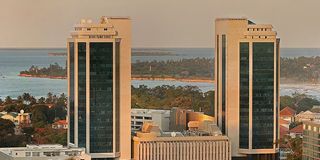
Dar es Salaam. The Bank of Tanzania (BoT) has raised its benchmark Central Bank Rate (CBR) by 0.5 percentage points to 6.25 percent for the third quarter ending September 2026, citing mounting inflationary pressures linked to the ongoing conflict in the Middle East.
The central bank said rising global energy, fertiliser and transport costs had increased risks to inflation, although it remains confident that Tanzania's economy will continue expanding at above six percent.
BoT Governor Emmanuel Tutuba, who chairs the Monetary Policy Committee (MPC), said the decision, reached during the committee's meeting on July 2, was intended to keep inflation within the target range without undermining economic growth.
"The decision intends to contain inflation driven by high energy, fertiliser and transportation costs in the world market caused by the geopolitical conflict in the Middle East," Mr Tutuba said in the MPC statement issued on July 3.
He said the adjustment was sufficient to preserve price stability while supporting economic activity.
"The adjustment in the CBR is appropriate enough to ensure inflation remains within the target range of three to five percent, while supporting economic growth," he said.
According to the MPC, the effect of the higher policy rate will be supported by moderate food inflation due to adequate food supplies from the 2025/26 harvest season.
The committee also expects exchange rate movements to have limited impact on inflation, supported by strong foreign exchange earnings from gold exports, tourism and agricultural commodities during the second half of 2026.
The MPC noted that global economic activity weakened in the quarter ending June 2026 as the Middle East conflict disrupted energy supplies and international trade routes.
The disruptions pushed up oil and fertiliser prices, as well as freight and insurance costs, increasing inflation risks and weakening global growth prospects.
"The outlook remains dependent on developments in the geopolitical conflict in the Middle East," the committee said.
Despite external shocks, Mr Tutuba said Tanzania's economy had remained resilient.
Based on high-frequency economic indicators, Mainland Tanzania's real Gross Domestic Product (GDP) is estimated to have grown by around six percent during the first half of 2026, supported by strong performance in agriculture, construction, mining, financial services and transport.
Zanzibar's economy is estimated to have expanded by 6.6 percent, driven mainly by tourism and construction.
The committee projects growth to remain above six percent during the second half of the year.
Inflation has increased but remains broadly within BoT's target range.
Annual headline inflation in Mainland Tanzania rose to 4.2 percent in May 2026 from 3.2 percent in March, remaining within the central bank's target range of three to five percent.
Mr Tutuba said a government fuel subsidy introduced in May and June helped ease inflationary pressures.
In Zanzibar, inflation increased to 5.5 percent from 4.9 percent, slightly above the target of five percent, although the committee expects it to remain broadly within target despite external risks.
Monetary conditions remained moderately accommodative during the second quarter of 2026, with private sector credit recording average growth of 24 percent, supported by sustained demand from productive sectors.
The banking sector remained stable, profitable and resilient, with sufficient capital buffers to withstand short-term shocks.
Asset quality also remained strong, with the ratio of non-performing loans standing at 2.9 percent in May 2026, well below the acceptable threshold of five percent.
The committee also noted that Tanzania's external sector continued to face pressure from the Middle East conflict, although the current account deficit remained low and stable.
The deficit was estimated at 2.4 percent of GDP in the year ending June 2026, compared with 2.2 percent in the year ending March, and is projected to remain at the same level.
Zanzibar continued recording a current account surplus, largely supported by tourism receipts.
Foreign exchange reserves remained at around $6 billion, sufficient to cover 4.3 months of projected imports, above the country's minimum benchmark of four months.
The reserves are expected to increase further, supported by rising exports and continued accumulation of gold through the domestic gold purchase programme.
The MPC also described fiscal performance as satisfactory, reflecting strong tax revenue collection alongside prudent expenditure and debt management.
Domestic revenue collection is estimated to reach 16.8 percent of GDP during the 2025/26 financial year, up from 15.6 percent in 2024/25.
Mr Tutuba said the committee would continue monitoring both global and domestic developments to ensure inflation remains under control.
"The MPC reaffirms its commitment to maintaining price stability and continues to monitor how developments in global and domestic conditions influence inflation trends," he said.
Register to begin your journey to our premium contentSubscribe for full access to premium content