Iringa/Njombe. A decade ago, many young people in Tanzania's Southern Highlands regarded farming as a last resort, offering little more than subsistence income.
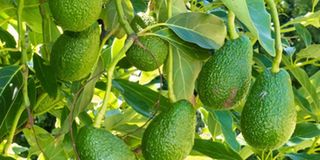
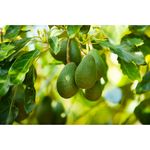
Today, thousands are earning a living from a crop once dismissed as ordinary. From producing seedlings and managing orchards to transporting fruit and working in processing factories, avocado, also known as green gold, is creating employment and transforming rural economies across Njombe, Iringa, Mbeya and Songwe.
The crop's expanding value chain has become one of Tanzania's most successful agricultural stories, generating new business opportunities for young entrepreneurs while attracting billions of shillings in private investment.
For Njombe Regional Commissioner Anthony Mtaka, the industry's success is measured not only by export volumes but by the growing number of young people making a living from it.
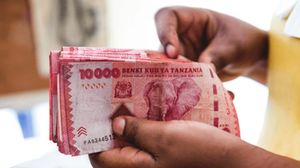
"Avocado has become a source of employment for young people. Today, you will find young entrepreneurs selling 10,000, 20,000, 50,000 or even 100,000 seedlings. Selling 10,000 seedlings at Sh5,000 each generates Sh50 million, demonstrating that agriculture can be a profitable business," he says.
Besides raising seedlings, young people are increasingly working as fruit aggregators, transporters, brokers and exporters, linking farmers with local processors and international markets.
The rapid expansion of commercial avocado farming has also encouraged many farmers to move away from subsistence agriculture and establish orchards aimed at export markets.
The industry's recent biggest turning point came in 2023 when the Njombe Regional Administration, working with the then Tanzania Investment Centre (TIC) which has since been rebranded to the Tanzania Investment and Special Economic Zones Authority (Tiseza), the Tanzania Horticultural Association (Taha) and other partners, began attracting investment in avocado oil processing.
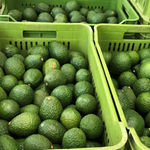
Until then, only Grade One avocados met export standards for Europe, Asia and the United States. Lower-grade fruit, commonly referred to as "rejects", often rotted on farms or was sold to Kenyan traders for as little as Sh100 to Sh150 per kilogramme.
The establishment of avocado oil factories completely changed the market.
Grade One avocados now fetch between Sh1,500 and Sh3,500 per kilogramme, while Grade Two fruit, once virtually worthless, sells for Sh500 to Sh950 per kilogramme for processing into avocado oil.
The higher prices have intensified competition among buyers and significantly increased farmers' incomes.
Today, Njombe hosts more than 18 export companies, five operational avocado oil processing factories and four additional factories under construction.
The investment has turned the region into Tanzania's avocado trading hub, attracting produce from Iringa, Mbeya, Songwe, Kigoma, Kagera, Arusha, Kilimanjaro, Manyara, Mwanza and even neighbouring Burundi.
Among the leading investors is Avo Africa, which, insiders say, has purchased about Sh12 billion worth of export-quality avocados and Sh13 billion worth of lower-grade fruit for processing.
The industry's expansion has created employment throughout the value chain.
According to Mr Mtaka, Avo Africa alone employs more than 600 workers on day and night shifts in fruit sorting and avocado oil production.
Employment opportunities have also emerged in nurseries, packhouses, logistics, transport, quality inspection and brokerage services.
In neighbouring Iringa Region, avocado production continues to expand.
Regional Agriculture Officer Gudelinda Tsere says output has risen steadily as more farmers adopt improved seedlings and modern farming practices.
Production increased from 2,210.5 tonnes in 2021/22 to 2,571.1 tonnes in 2024/25, despite seasonal fluctuations.
According to a Agriculture Officer for COPRA Southern Highlands, Beatrice Miho, avocado has become one of Tanzania's most important commercial crops because of its broad economic impact.
"Avocado is Tanzania's green gold. It is creating employment not only for farmers but for thousands of young people working throughout the value chain," she says.
At Kibidula Farm in Mafinga, farm manager Nuhu Mapile says demand for quality seedlings continues to rise.
The farm now produces between 70,000 and 80,000 seedlings annually, with production increasing every year.
"Last year we transported around 20 containers of seedlings, each carrying about 24 tonnes. That shows how rapidly the industry is expanding," he says.
For Frank Ngailo, a young avocado farmer in Kilolo District, the crop has changed perceptions about agriculture.
"Many young people used to believe farming was only for older generations. Avocado has shown us that agriculture can become a permanent and profitable career," he says.
He acknowledges that access to finance, technical knowledge and reliable markets remain major challenges but says training provided by government and development partners has improved production standards.
Another young farmer, Jenni Mbunda from Njombe, describes avocado as a life-changing opportunity.
"It has enabled many young people to create their own employment and build sustainable businesses. Permanent crops provide income for many years if managed properly," she says.
She encourages young people to treat farming as a business that requires investment, technology and long-term planning.
The industry's prospects continue to brighten.
Regional authorities are now preparing the next phase of development by encouraging investment in higher-value products, including refined edible avocado oil, cosmetic ingredients, avocado concentrate and livestock feed, enabling more processing to take place within Tanzania.
The strategy is expected to create additional jobs while increasing export earnings.
The outlook is also supported by rising global demand.
Tanzania is now Africa's fourth-largest avocado exporter, after Kenya, South Africa and Morocco, exporting more than 36,500 tonnes worth nearly $80 million annually.
The industry's exports are growing by about 20 percent each year, with Europe accounting for 40 percent of shipments, followed by India (30 percent) and the Middle East (19 percent).
Register to begin your journey to our premium contentSubscribe for full access to premium content