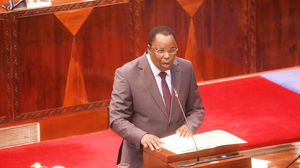
Dodoma. Speaker of the National Assembly, Mussa Azzan Zungu, has directed the Tanzania Communications Regulatory Authority (TCRA) and the Capital Markets and Securities Authority (CMSA) to meet the Parliamentary Budget Committee and explain why telecommunications companies have failed to comply with legal requirements to list shares on the stock market.
In 2016, the Electronic and Postal Communications Act (EPOCA) 2010 was amended and section 26 of the law introduced the requirement for telecommunication companies other than those owned by the government to sell at least 25 percent of their shares to the public, through the stock exchange.
The government also granted the companies a two-year compliance period beginning on July 1, 2016.
However, until June 2026, it’s only Vodacom Tanzania PLC which has complied with the regulatory requirement, Mr Zungu told the Parliament yesterday, adding that the move enhances transparency and accountability in corporate operations.
He questioned why the TCRA, as the telecommunication industry regulator, had not taken stronger action to enforce the law.
He also questioned the role of the CMSA, which is responsible for overseeing capital market compliance.
“As a result, I direct the TCRA and CMSA to meet with the Budget Committee and explain why no action has been taken,” Mr Zungu told lawmakers.
He further argued that the failure to enforce existing laws was contributing to significant revenue losses for the government.
“Honourable members, substantial government revenue is being lost because our laws are not being implemented.
There are neighbouring countries that receive sizeable dividends, amounting to as much as Sh480 billion, from telecommunications companies.
These funds should also be realised in Tanzania to support the development of our people,” he said.
The intent behind mandatory listing was to broaden local ownership of the telecommunications sector, allowing ordinary Tanzanians to benefit financially from the profitability of the firms, and to bolster transparency through stricter reporting requirements.
Last year, the government announced plans to reconsider the law that mandates telecom companies to list 25 percent of their shares on the Dar es Salaam Stock Exchange (DSE).
This move was part of an effort to assess the law's effectiveness and address the challenges faced by telecom companies in the country.
The then Minister for Communications and Information Technology, Mr Jerry Silaa, told the ministry officials and stakeholders in Arusha that a more market-driven approach might be beneficial.
While acknowledging the challenges faced by telecom companies, Mr Silaa highlighted that the performance of listed companies has not been as strong as anticipated.
“We are receiving many questions about when other companies will join the listing process.
However, the performance of those who have already listed hasn’t been great.
I believe the best way to grow any sector in this market economy is to let market forces drive it,” remarked Mr Silaa during a session to discuss the country’s ten-year digital economy strategy (2024-2034).
He added that the government, in collaboration with stakeholders, would review the steps taken thus far and explore ways to ensure continued growth and profitability within the telecommunications sector.
“We create laws to make things easier, not to restrict ourselves. Laws are not set in stone. There are Members of Parliament here, and the Parliamentary Committee is also involved. I believe now is the right time for us to sit down and design a better framework for these companies to operate,” Mr Silaa explained.
When the law came into force, almost all telcos had applied for listing but the process was affected by issues around ownership of the companies.
Some companies like Tigo (currently Yas) and Airtel had started the preparation of the prospectus so that, after regulatory approval, would move ahead with the IPO.
However, they faced ownership challenges before the process came to an end.
In 2017, lawyers representing a British registered company associated with Yusuf Manji claimed in court that the billionaire businessman owned 99 percent of Tigo.
Brick House Law Associates sought the stoppage to the planned sale of Tigo shares at the DSE, terming the move illegal as their client was not consulted.
According to the law firm, Golden Globe International Services was the absolute majority shareholder of MIC Tanzania Limited with 34,479 shares of 34,480 shares.
The remaining one share was shown as belonging to Shai Holdings.
However, Mic Tanzania challenged the matter in the court.
The company said in 2024 that it was evaluating available options before offloading the shares to the public in order to comply with the regulatory requirement.
In 2019, the government successfully negotiated a stronger stake in Airtel, raising its holding to 49 percent from 40 percent.
Register to begin your journey to our premium contentSubscribe for full access to premium content