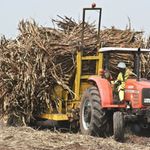
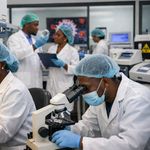
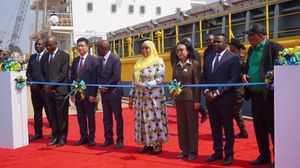
Senior official in the Prime Minister's Office (Labour Department), Odo Hekela, speaks to journalists on guidelines for sustainable economic growth among small-scale producers in Dodoma on July 20, 2026. PHOTO | RACHEL CHIBWETE
Dodoma. The government is preparing sustainable economic growth guidelines aimed at helping small-scale producers and processors comply with regulatory standards without facing multiple inspections from different government institutions.
Speaking on Monday, July 20, during a stakeholders' meeting to discuss the proposed guidelines, a senior official in the Prime Minister's Office (Labour Department), Odo Hekela, said institutions responsible for the environment, labour, social security, agriculture and forestry had agreed to adopt a coordinated approach to streamline compliance requirements for producers and investors.
He said the move was intended to address complaints from businesses over overlapping inspections by various regulatory agencies, stressing that the government's role is not to hinder production but to ensure goods meet national and international standards.
"Our aim is to enable producers to assess their own compliance before government inspectors visit. The government's role is not to create obstacles but to safeguard product quality and compliance with established standards," Mr Hekela said.
He noted that international markets increasingly require proof that products are manufactured in compliance with environmental protection, workers' rights, occupational health and safety, and quality standards.
According to him, the biggest challenge facing small producers is not non-compliance but limited awareness of legal requirements relating to environmental protection, employment, workplace safety, labour contracts, wages and the prohibition of child labour.
"We want producers to assess themselves as though looking into a mirror. They should know in advance whether they meet the required standards before an inspection. This will reduce bureaucracy and improve the competitiveness of Tanzanian products in international markets," he said.
Acting Morogoro Zonal Manager of the National Environment Management Council (NEMC), Joyce Omolo, said the guidelines would make it easier for investors and producers to comply with environmental laws before official inspections.
She said the approach had already reduced inspection times because many investors now conduct self-assessments and address compliance gaps before inspectors arrive.
"Work that previously took three or four days can now be completed within two days because investors have already complied with most legal requirements. Our role is simply to verify compliance," Ms Omolo said.
Samuel Kajiba, a project officer with the International Union for Conservation of Nature (IUCN), said collaboration between the government and stakeholders in promoting inclusive and sustainable economic growth would strengthen sustainable production, protect the environment and improve communities' resilience to climate change.
He said IUCN is implementing the SUSTAIN project, which seeks to promote sustainable food production systems while protecting landscapes and ecosystems.
The project began in 2024 and its first phase will run until 2030, with a second phase expected to continue until 2036.
"These initiatives help us build resilient ecosystems, protect land, water resources and biodiversity, while strengthening communities' capacity to adapt to the impacts of climate change," Mr Kajiba said.
He added that the long-term goal is to integrate the approach into national implementation frameworks, creating a unified system that links economic growth, environmental conservation and climate resilience while contributing to the implementation of Tanzania's Development Vision 2050.