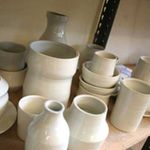
Dar es Salaam. A Tanzanian ceramics manufacturer has joined a growing list of local companies raising concerns over Kenya's new tax measures, warning that they threaten regional trade and could lock Tanzanian products out of one of their biggest export markets.
The complaint comes just two months after glass manufacturer Kioo Limited objected to Kenya's proposal to impose a 35 percent excise duty on imported glass bottles from East African Community (EAC) partner states.
The latest dispute comes despite commitments by President Samia Suluhu Hassan and Kenyan President William Ruto, who in May set June 30, 2026, as the deadline for removing outstanding non-tariff barriers, in line with a directive issued by the EAC Heads of State Summit.
Trade between Tanzania and Kenya is estimated at about $1 billion annually.
Goodwill Tanzania Ceramic Co. Ltd has urged the Tanzanian government and the EAC to intervene over Kenya's Finance Act, 2026, saying the new excise duty regime undermines the principles of the EAC Common Market.
The company's Business Manager, Mr Justin Xie, said the measures could reduce the competitiveness of Tanzanian ceramic products in Kenya, weaken regional trade and discourage investment if left unresolved.
"We fully support regional integration and believe the East African market should remain open, predictable and beneficial to manufacturers from all partner states," he said. "Our concern is that the new measures risk reversing the progress businesses have made over the years in building regional supply chains."
Under Kenya's new tax regime, imported ceramic tiles are subject to an excise duty of either five percent of the excisable value or KSh50 per kilogram, whichever is higher.
The previous system was based on customs value or the area of the tiles measured in square metres. For sanitary ware, Kenya has also shifted the basis for calculating excise duty from customs value to excisable value.
According to Mr Xie, the changes significantly increase the cost of exporting ceramic products to Kenya.
"The new excise duty creates a major barrier to regional trade. For ceramic tiles, the effective excise duty calculated on a weight basis may exceed the factory selling price by more than two times, making exports to Kenya commercially unsustainable," he said.
He said that replacing customs value with excisable value gives customs authorities greater discretion in determining taxable value, creating uncertainty during customs clearance and increasing compliance costs.
"Manufacturers require certainty and consistency to plan production, pricing and investment decisions. When tax calculations become unpredictable, businesses cannot accurately estimate the final cost of supplying export markets. That uncertainty alone discourages trade and long-term investment," he said.
Kenya is among Tanzania's largest export markets for ceramic products. Mr Xie warned that reduced exports would affect factory output, employment and investor confidence, with wider consequences across the supply chain.
"If exports decline, the impact will extend beyond manufacturers. It will also affect transporters, raw material suppliers, service providers and thousands of workers whose livelihoods depend on regional trade," he said.
Mr Xie said the company was not seeking preferential treatment but rather the implementation of trade rules already agreed by EAC partner states.
"As manufacturers, we have invested heavily in Tanzania, created local employment, transferred technology and contributed significantly to government revenue.
We support fair competition, but competition must take place under transparent and predictable rules consistent with regional trade commitments," he said.
"We are not asking for preferential treatment. We are simply requesting the fair implementation of the principles agreed upon by all EAC partner states.
Regional economic integration can only succeed when businesses have confidence that agreed trade rules are respected equally by all member countries."
He said that maintaining investor confidence was essential to achieving the region's industrialisation ambitions. he company has called on the Tanzanian government to continue engaging EAC institutions and the Kenyan authorities to find an amicable solution.
Goodwill said Tanzania's industrialisation drive has encouraged significant investment in ceramic manufacturing, creating thousands of direct and indirect jobs while reducing reliance on imported building materials.
It said preserving a stable regional trading environment would enable manufacturers to expand production, invest in new technology and create more jobs.
Contacted for comment, the Minister for Industry and Trade, Ms Judith Kapinga, said the government was already engaging Kenya through EAC mechanisms to address the concerns.
She said the issue extends beyond ceramic products and affects several Tanzanian exports to the Kenyan market.
"Within the East African Community, there are established procedures governing the movement of goods to ensure member states protect each other's exports. We are continuing discussions with them," she said.
"At the same time, we are taking reciprocal measures similar to those introduced by Kenya by incorporating them into our Finance Act, which came into effect this month."
Ms Kapinga said Tanzania remained committed to resolving the matter through regional dialogue while protecting the interests of domestic producers.
"Our priority is to ensure that Tanzanian products continue to enjoy fair access to regional markets while respecting the agreements that bind all EAC partner states. We are confident that the ongoing dialogue will provide an appropriate platform for addressing these concerns," she said.
She said that the government remained committed to strengthening regional trade through consultation rather than confrontation.
"The EAC remains an important market for Tanzanian manufacturers, and we believe that through continued consultations and adherence to agreed regional frameworks, solutions can be found that benefit businesses and consumers across the region," she said.
Register to begin your journey to our premium contentSubscribe for full access to premium content