Houthis fire on Saudi Red Sea oil sites as conflict widens
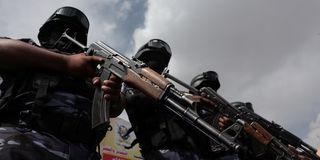
Members of Houthi security force stand guard as Houthi supporters rally against the Saudi-led coalition's restrictions on Houthi-controlled areas, which the group describes as a blockade, in Sanaa, Yemen, July 17, 2026. PHOTO I REUTERS
Riyadh. Yemen's Iran-aligned Houthi militants fired missiles at Saudi oil installations on the Red Sea coast on Saturday, while Saudi-backed forces launched air strikes on Houthi positions, opening a second front in a conflict that is already disrupting global energy supplies.
Houthi military spokesperson Yahya Saree said the group had targeted facilities belonging to Saudi state oil company Aramco in Jizan and Yanbu, claiming the attacks successfully hit their targets.
Video shared on social media and verified by Reuters showed a large column of smoke rising near the Aramco refinery in Jizan.
Two Asia-based oil trading sources said they had received reports of possible damage to fuel and oil storage facilities in Jizan. Aramco had not commented on the incident by the time of publication.
In Yanbu, two ballistic missiles targeting oil facilities were intercepted by a US-made Patriot air defence system operated by Greek military personnel under a defence agreement with Saudi Arabia, according to Greek security sources.
Yanbu is Saudi Arabia's main Red Sea oil export terminal, handling millions of barrels of crude each day. It has become the kingdom's principal export route following the blockade of the Strait of Hormuz by Iran. Jizan, located near the Yemeni border, is home to a refinery with a processing capacity of 400,000 barrels per day.
In Yemen, the air force of the Saudi-backed internationally recognised government carried out strikes on Houthi missile and drone launch sites, as well as weapons depots, in the provinces of Marib and Al-Jawf, Yemeni officials told Reuters.
Earlier, the Saudi-led coalition said it had struck Houthi military positions in the Red Sea port city of Hodeidah on Friday.
Yemeni officials said both sides in the country's civil war were mobilising forces along the front lines.
Ceasefire under strain
Saudi Arabia has led an Arab coalition against the Houthis for more than a decade after the Iran-backed group seized Yemen's capital, Sanaa, and large parts of the country's north and west, including much of the Red Sea coastline.
The civil war, which claimed hundreds of thousands of lives through fighting and famine, had largely remained under a ceasefire since 2022. However, the truce has come under renewed strain this month as the Houthis became increasingly involved in the wider regional conflict involving their Iranian allies.
The Houthis declared a naval blockade of Saudi Arabia over the past week, with their leader, Abdul Malik al-Houthi, warning that all Saudi oil facilities would become targets if Riyadh intensified its role in the conflict.
The escalation has raised fresh concerns over global oil supplies and contributed to a sharp rise in crude prices, with Brent crude climbing above $100 a barrel for the first time since May.
Saudi Arabia vows response
US President Donald Trump on Friday warned of "major military punishment" for Iran and the Houthis after the group claimed responsibility for attacks on two Saudi oil tankers in the Red Sea on Thursday.
The Saudi-led coalition said it would continue taking all necessary measures to protect maritime navigation and Saudi interests, warning that it would respond decisively if Houthi attacks continued.
Yemen's Houthi-run foreign ministry described Friday's strikes on Hodeidah as the beginning of an "escalation for escalation" phase and blamed Saudi Arabia for any further deterioration.
Houthi-affiliated Al Masirah television reported that the Saudi air strikes targeted facilities belonging to the state telecommunications corporation in Hodeidah city. It also said Saudi forces struck Kamaran Island off Yemen's western coast.
Saudi Ambassador to Yemen Mohammed Al-Jaber said on X that the kingdom would continue supporting the flow of ships into Hodeidah Port despite continued Houthi attacks on Red Sea shipping.
The operation of Hodeidah Port remains a matter of international concern, with aid agencies warning that any disruption could worsen humanitarian conditions in Yemen, where millions remain dependent on imported food and supplies.