Mkenda urges scientists to test, not dismiss, traditional herbs
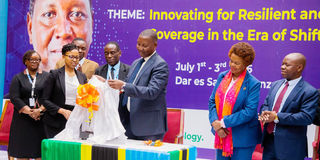
The minister for Education, Science and Technology, Prof Adolf Mkenda, launches Next Generation Sequencing at Muhimbili University of Health and Allied Sciences (Muhas) in Dar es Salaam yesterday. On his right is Muhas Vice Chancellor, Prof Appolinary Kamuhabwa. PHOTO | COURTESY
Dar es Salaam. Medical researchers have been challenged to unlock the country's vast wealth of traditional medicinal knowledge through rigorous scientific research, a move experts say could expand treatment options, strengthen the healthcare system and accelerate the country's journey towards universal health coverage (UHC).
The call was made by the minister for Education, Science and Technology, Prof Adolf Mkenda, while officially opening the three-day 14th MUHAS Scientific Conference yesterday.
Addressing hundreds of researchers, clinicians, policymakers, students and development partners, Prof Mkenda said the future of Tanzania's healthcare system depends not only on adopting modern medical technologies but also on scientifically validating traditional remedies that millions of people already rely on.
"We have so many cases where people say, 'I used this herb and I got better.' Science exists for a good reason. Once you have anecdotal evidence, you apply science to establish the validity of the claim," he said.
The conference, organised under the theme Innovating for Resilient and Sustainable Universal Health Coverage in a Changing Global Financing, brought together experts to discuss how innovation can help countries deliver quality healthcare amid shrinking donor funding and increasing disease burdens.
For Prof Mkenda, one of the biggest untapped opportunities lies in bridging traditional medicine and modern medicine.
"I challenge you to push the frontier of scientific knowledge. Science must bridge the gap between traditional medicine and modern medicine," he told researchers.
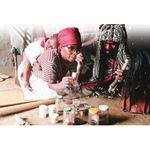
He noted that while many Tanzanians claim relief from herbal remedies, those claims often remain unverified because they have not undergone laboratory testing, chemical analysis or clinical trials. Instead of dismissing traditional medicine, he said scientists should investigate it.
"If somebody says this herb cures a disease, don't simply believe it or reject it. Conduct chemical analysis. Carry out scientific experiments. Do clinical trials. Establish the facts," he said.
Prof Mkenda illustrated his argument with personal experiences of people who reported recovering from illnesses after taking traditional remedies. While acknowledging such testimonies, he stressed that individual stories alone cannot establish scientific truth.
"Science helps us determine whether the treatment worked or whether the illness would have resolved on its own," he said. He argued that many of today's modern medicines originated from plants and natural compounds.
"The difference is that modern medicine has gone through scientific validation. We know the right dosage, the side effects and how it should be prescribed. That is the bridge we need."
Prof Mkenda announced that his ministry will organise a national workshop bringing together universities, hospitals, researchers, traditional medicine practitioners, legal experts and regulators to develop a framework for advancing medical science in Tanzania.
The discussions, he said, will focus on identifying promising traditional knowledge and determining how scientific methods can transform it into safe, effective and affordable medicines.
The challenge resonated strongly with the vision presented by MUHAS Vice Chancellor, Prof Appolinary Kamuhabwa, who said universities must increasingly focus on solving real societal problems rather than producing research solely for academic publication.
"This challenge presents an opportunity. It calls upon universities to move beyond generating knowledge for publication and instead focus on generating knowledge that informs policy, strengthens health systems, drives innovation and improves people's lives," he said.
Prof Kamuhabwa said advances in artificial intelligence, genomics, digital health, big data and precision medicine are transforming healthcare globally, adding that Tanzania must embrace these technologies while developing home-grown innovations to tackle local health challenges.
He cited the launch of Next Generation Sequencing services at MUHAS as an example of how the university is investing in technologies that will strengthen diagnosis, biomedical research and healthcare delivery.
Health experts say integrating scientifically validated traditional medicine into mainstream healthcare could significantly improve access to treatment, particularly in rural communities where herbal medicine remains the first point of care for many households.
According to the reports, up to 80 percent of people in some African countries depend on traditional medicine for their primary healthcare needs.
Experts argue that properly evaluating these remedies could produce affordable medicines while protecting patients from ineffective or unsafe treatments.
Public health specialist, Dr Boniface Mberwa, said countries pursuing universal health coverage must invest in locally driven research and innovation if they are to reduce dependence on imported technologies and medicines.
He argued that. "scientifically validated indigenous knowledge offers Africa an opportunity to develop affordable health solutions while strengthening evidence-based healthcare systems."
For Tanzania, the discussions come at a critical moment. The country is expanding access to healthcare while confronting rising cases of non-communicable diseases, infectious diseases, emerging health threats and changing global health financing.
Prof Mkenda believes Tanzanian scientists are capable of making discoveries that could benefit not only the country but the world.
"We can contribute knowledge that others do not have. We can develop solutions from our own traditional knowledge if we apply science," he said.
Register to begin your journey to our premium contentSubscribe for full access to premium content