Tanzania, US sign Sh8 trillion health partnership to strengthen health systems
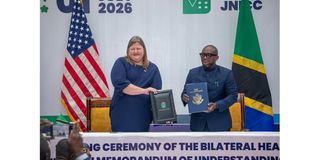
Minister of Health Mohamed Mchengerwa and US Embassy Public Affairs Officer Jeanne Clerk sign a Memorandum of Understanding on a five-year $3.1 billion partnership to strengthen health systems during an event held in Dar es Salaam on July 1, 2026. PHOTO | COURTESY
Dar es Salaam. Tanzania and the United States have signed a five-year bilateral global health Memorandum of Understanding (MoU) worth $3.1 billion (about Sh8 trillion), marking a major shift towards a long-term partnership aimed at strengthening the country’s health system and improving preparedness for future public health challenges.
The agreement seeks to improve healthcare delivery, strengthen disease surveillance and response systems. It also seeks to enhance Tanzania’s ability to tackle infectious diseases and emerging health threats.
The deal forms part of the United States’ America First Global Health Strategy, which promotes sustainable and country-led health partnerships.
Building on decades of cooperation in the health sector, the agreement positions Tanzania and the US as co-investors rather than following a traditional donor-recipient model.
It aims to establish a resilient national network of hospitals, laboratories and healthcare workers capable of meeting current healthcare needs while improving the country’s readiness for future disease outbreaks and health emergencies.
The partnership is expected to have broader implications for Tanzania beyond healthcare delivery. Stronger health systems are considered critical for economic productivity, human capital development and national resilience, as healthier populations contribute to improved workforce participation and reduced healthcare burdens.
The agreement also comes as Tanzania seeks to reduce dependence on external financing while increasing domestic investment in critical sectors. Access to American expertise in pharmaceuticals, health innovation and medical technology is expected to support improvements in healthcare quality and efficiency while helping to build local capacity.
Under the arrangement, the US will align its assistance with Tanzania’s national health priorities, while Tanzania will progressively increase its own contribution to healthcare financing and management.
The MoU seeks to sustain gains in controlling major diseases, including HIV, malaria, polio and tuberculosis, while strengthening maternal and child healthcare services to meet the needs of the country’s growing population.
It also aims to improve Tanzania’s capacity to detect, prevent and respond to infectious disease outbreaks more effectively and independently.
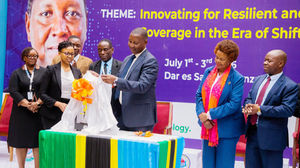
Speaking during the signing ceremony in Dar es Salaam on July 1, 2026, Minister for Health Mohamed Mchengerwa said the agreement represented a significant shift towards equality, accountability and self-reliance.
“This agreement is not a continuation of dependency but a roadmap to move us away from it. By 2030, Tanzania will shoulder a significant share of the costs of its health system,” he said.
Financially, the United States, in collaboration with Congress, intends to provide more than $1.3 billion over the next five years, while Tanzania is expected to increase domestic health spending by approximately $1.8 billion during the same period.
The combined investment signals a transition towards a sustainable partnership model designed to strengthen national ownership of Tanzania’s health sector and reduce long-term dependence on donor funding.