Dar es Salaam. Parliament’s Budget Committee has raised concern over the pace of growth in Tanzania’s public debt, warning that key sustainability indicators are edging closer to their limits and could constrain the country’s future borrowing capacity if not carefully managed.
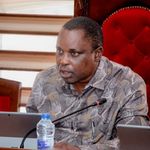
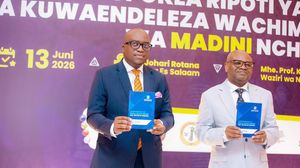
Presenting the committee’s report on the government’s debt position, Budget Committee chairman Mashimba Ndaki said the national debt stood at Sh114.34 trillion as of March 2026, up by 8.97 percent from Sh104.93 trillion recorded in March 2025.
He told Parliament that external debt accounts for 66.4 percent of the total debt stock, while domestic debt makes up 33.6 percent. The debt-to-GDP ratio has also risen to 48.8 percent, moving closer to the government’s ceiling of 55 percent.
Mr Ndaki said that although Tanzania’s debt remains within sustainable levels, emerging trends in accumulation and utilisation warranted caution.
“Although Tanzania’s debt remains within sustainable levels, some key indicators are now moving closer to their limits. It is therefore important that all borrowed funds are directed to productive development projects that can stimulate economic growth and expand the country’s revenue base,” he told Parliament.
The committee’s analysis shows that loans used to finance the budget deficit and support the balance of payments account for about 14 percent of the 2025/26 budget, pointing to continued reliance on borrowing to fund government programmes and bolster foreign exchange reserves.
Lawmakers also raised concern over weaknesses in project preparation, noting that inadequate planning has led to additional borrowing during implementation.
Among the projects cited was the Selander Bridge, which required an additional $32.62 million, a 36 percent increase from the original financing package of $91 million. The Kigoma–Nyakanazi power substation project also sought an additional $25.5 million, equivalent to 57 percent of the original loan amount.
“Government should ensure thorough project design and feasibility assessments before contracting loans. Weak project preparation has contributed to additional financing requirements in a number of projects,” Mr Ndaki said.
The committee further questioned the use of borrowed funds to finance recurrent expenditure, saying the practice contravenes provisions of the Loans, Guarantees and Grants Act.
According to the report, part of the Sh4.5 trillion received under the Programme-for-Results (P4R) arrangement over the past four years was used to support routine government operations instead of infrastructure development.
It also noted that debt-servicing indicators are nearing their thresholds. Debt-service payments are projected to reach 12.2 percent of export earnings in 2026/27, against a ceiling of 15 per cent, while debt-service costs are expected to absorb 13.8 percent of government revenue, compared to the 18 percent limit.
Although both indicators remain within acceptable ranges, projections suggest they could rise further in 2027/28.
“If the current trend continues and debt indicators move closer to their ceilings, Tanzania could face challenges in accessing international financing needed to implement development projects. The solution lies in strengthening domestic revenue mobilisation and ensuring loans generate economic returns,” Mr Ndaki said.
To mitigate debt risks, the committee recommended that all future borrowing be channelled towards strategic development projects capable of boosting economic growth and national income. It also urged state-owned enterprises and commercially viable public projects to seek financing from capital markets rather than relying heavily on sovereign borrowing.
The committee further called on the government to intensify domestic revenue mobilisation to reduce dependence on external loans and strengthen long-term fiscal sustainability.
Register to begin your journey to our premium contentSubscribe for full access to premium content