How Samia is redefining women’s diplomacy in Africa
By Ellen Maduhu
Every June 24, the world marks the International Day of Women in Diplomacy, established by the United Nations in 2022 to recognize the contribution of women to diplomacy, peace-building and international cooperation.
The observance comes at a time when women remain underrepresented in global leadership.
According to the United Nations, women account for only about one-fifth of Permanent Representatives to the UN, while only a small number of countries are led by female Heads of State or Government.
Yet experience increasingly shows that when women lead, diplomacy becomes more inclusive, responsive and effective.
Across the world, women leaders have advanced peace, strengthened international cooperation and shaped economic governance through dialogue and consensus-building.
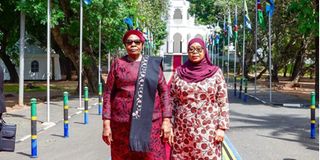
Few contemporary African leaders illustrate this more clearly than President Samia Suluhu Hassan, whose diplomatic approach has strengthened Tanzania’s global standing while delivering measurable development outcomes at home.
Women reshaping diplomacy
For decades, diplomacy was largely dominated by men. Today, women are increasingly shaping international affairs at the highest level.
Leaders such as Eleanor Roosevelt, Madeleine Albright, Christine Lagarde, Amina J. Mohammed and Ngozi Okonjo-Iweala have demonstrated that women can influence global policy, multilateral cooperation and economic governance.
Africa has equally produced distinguished leaders, including former Liberian President Ellen Johnson Sirleaf, who helped rebuild her country’s international credibility, and Dr Nkosazana Dlamini-Zuma, the first woman to chair the African Union Commission.
Their achievements demonstrate that women are no longer simply participants in diplomacy; they are helping define its future.
Tanzania’s diplomatic legacy
Tanzania has long contributed distinguished women to international diplomacy.
Ambassador Gertrude Mongella chaired the landmark Fourth World Conference on Women in Beijing in 1995 and later became the first President of the Pan-African Parliament.
Dr Asha-Rose Migiro enhanced Tanzania’s global profile as Deputy Secretary-General of the United Nations, while Ambassador Liberata Mulamula has served in senior regional positions and currently serves as the African Union Special Envoy on Women, Peace and Security.
President Hassan has built upon this legacy by elevating Tanzania’s diplomatic influence and aligning foreign policy more closely with national development.
Diplomacy that delivers results
When President Hassan assumed office in March 2021 as Tanzania’s first female Head of State, she also became the country’s chief diplomat. What distinguishes her leadership is the deliberate use of diplomacy as an engine for economic transformation.
Rather than treating foreign relations as primarily political, she has consistently linked diplomacy to investment, tourism, trade, technology transfer, education and job creation.
Through engagements across Africa, Europe, Asia, the Middle East and the Americas, she has positioned Tanzania as a stable and reliable investment destination.
Her approach rests on three pillars: opening Tanzania to the world, strengthening strategic partnerships and ensuring diplomatic engagements produce tangible benefits for citizens.
The results have been significant. Tanzania now receives more than five million international visitors annually, generating approximately US$4 billion in tourism revenue.
The Royal Tour initiative substantially raised the country’s global tourism profile and opened new international markets.
Foreign direct investment commitments have also grown as investor confidence strengthened. State visits, business forums and bilateral engagements have generated opportunities in energy, mining, infrastructure, agriculture, manufacturing and technology.
At the same time, Tanzania has expanded and strengthened its diplomatic missions abroad, improving its ability to attract investment, promote exports, support Tanzanians overseas and deepen relations with strategic partners.
Recent agreements in education, science, technology, energy, agriculture, health and trade further demonstrate how diplomacy is being translated into practical development outcomes.
Raising Tanzania’s global profile
President Hassan’s influence extends beyond economic diplomacy.
Her leadership has strengthened cooperation within the East African Community, the Southern African Development Community and the African Union, while increasing Tanzania’s visibility in global forums.
She has consistently championed issues including economic development, climate action, energy security, regional integration, and maternal and child health.
Inspiring the next generation
President Hassan’s leadership is equally significant for what it represents for women.
Her administration has expanded opportunities for women to serve in senior leadership and diplomatic positions, reinforcing the principle that leadership should be determined by competence and performance rather than gender.
Like Ellen Johnson Sirleaf, Nkosazana Dlamini-Zuma and Amina Mohammed, President Hassan is helping create pathways for future generations of African women.
By leading effectively at the highest level and delivering measurable results, she has demonstrated that women can shape national development and international relations with equal distinction.
For young women across Tanzania and beyond, her presidency offers more than inspiration; it provides evidence that leadership can overcome historical barriers through vision, competence and performance.
President Hassan’s leadership demonstrates that inclusive, development-oriented diplomacy can strengthen international partnerships while improving the lives of citizens. That may well be the most enduring contribution of women’s diplomacy today.
Ellen Maduhu is Acting Director in the Department of Europe and Americas, Ministry of Foreign Affairs and East African Cooperation of the United Republic of Tanzania