The gap between East Africa's integration rhetoric and its trade reality is usually measured in years. This time, it was measured in hours.
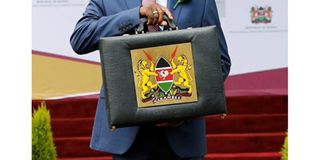
One day after Presidents Samia Suluhu Hassan and William Ruto stood together in Dar es Salaam and pledged to eliminate all remaining non-tariff barriers by June 30 – Kenya published its Finance Bill 2026. Buried in amendments to the First Schedule of the Excise Duty Act was a proposal to impose a 35 percent excise duty on glass bottles from EAC partner states, stripping away an exemption that Kenya's own Parliament had legislated in 2021 after losing a court case it should never have needed to fight.
The product at the centre of this dispute is unglamorous, but the principle is not.
Kioo Limited, Tanzania's leading glass manufacturer, supplies approximately 40,000 metric tonnes of glass bottles to Kenya annually, roughly a third of Kenya's total container glass demand. In 2020, Kenya introduced a 25 percent excise duty that captured EAC-origin glass in its scope.
Kioo took the matter to the East African Court of Justice, arguing the measure was discriminatory and inconsistent with Kenya's obligations under the EAC Treaty and Customs Union Protocol.
The court agreed and suspended implementation. Kenya's Parliament then amended the Excise Duty Act through the Finance Act 2021, expressly exempting EAC-origin glass bottles from excise duty. The Finance Bill 2026 proposes to delete that amendment entirely.
Kioo exports approximately $22 million worth of glass bottles to Kenya annually; the proposed 35 percent duty would add an estimated $7.7 million to that cost burden, effectively a one-third surcharge on goods that currently move duty-free. The exception carved out only for pharmaceutical packaging confirms this was a deliberate choice, not a drafting error.
From a legal standpoint, Kenya's position is weak. The EAC Customs Union Protocol prohibits member states from imposing internal duties on goods that meet EAC Rules of Origin. The EACJ has already interpreted Kenya's obligations on this precise product. A court ruling does not expire because a new Finance Bill arrives.
Kioo has indicated it is exploring legal options including a return to the EACJ, and has formally petitioned Tanzania's ministries of foreign affairs, finance, and trade to intervene through diplomatic and regional channels.
On the current facts, a second challenge would likely succeed. The more important question is why Tanzania's largest glass exporter should have to litigate the same right twice.
As a practitioner advising businesses across this region, I hear a version of the same concern repeatedly from private sector clients – Tanzanian, Kenyan, and international alike. The question is whether they hold when they become commercially inconvenient.
A business making a cross-border investment decision needs to know that a court ruling in its favour does not simply reset the clock to the next Finance Bill cycle otherwise the risk premium on regional operations rises, deal timelines lengthen, and capital that might have stayed in East Africa looks elsewhere.
The litigation tax on regional trade falls hardest not on companies large enough to return to court, but on the many smaller operators who absorb the cost quietly or exit the market.
Fairness requires acknowledging that Tanzania carries its own NTB record into this conversation. The 2025 restrictions on foreign nationals in designated service categories – in sectors where EAC Common Market Protocol commitments on services apply – drew legitimate criticism from Kenya and others in the region. Regional integration is a reciprocal obligation.
No member state occupies the moral high ground on trade barriers without qualification, and Tanzania's government knows this.
But reciprocal imperfection does not dissolve treaty obligation. Kenya's Finance Bill, if passed in its current form, is a proposed breach of a protocol that Kenya has already been found to have violated on the same question. The EACJ ruling stands. The 2021 amendment stands. The June 30 NTB deadline set jointly by both heads of state is now three weeks away.
That deadline has become something larger than a bilateral trade milestone. It is a stress test for whether EAC integration commitments survive contact with domestic fiscal politics. What happens here matters well beyond the Kenya-Tanzania corridor.
The African Continental Free Trade Area depends on the EAC as its most legally developed building block. If the bloc's two largest trading partners cannot hold a customs exemption for thirty days after reaffirming it at head-of-state level, the question that investors and businesses across the continent are entitled to ask is a precise one: what is the treaty worth?
Amne Suedi is the Managing Director of Shikana Investment and Advisory, Honorary Consul of Switzerland in Zanzibar, and Chair of the Switzerland-Tanzania Chamber of Commerce.