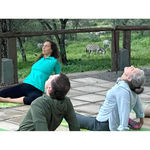
Arusha. More than 500 residents from Arusha City and surrounding areas gathered for a special Yoga and Meditation session on Sunday, highlighting the growing popularity of the ancient wellness practice in Tanzania ahead of the 12th International Day of Yoga.
The event, held at Fun Retreat grounds in Arusha, was organised by the High Commission of India in Tanzania in collaboration with the Kalakendra community as part of nationwide preparations for the global celebration, which will be marked on June 21.
Participants drawn from different professions, age groups and communities took part in exercises designed to improve physical fitness, reduce stress and promote mental wellbeing.
Speaking after the session, India’s High Commissioner to Tanzania, Bishwadip Dey, said the initiative was aimed at encouraging people to adopt healthier lifestyles through regular physical activity and wellness practices.
He noted that yoga offers a wide range of benefits, including improved cardiovascular health, increased flexibility and strength, better stress management and enhanced mental wellbeing.
“The overwhelming response from Arusha residents shows that yoga is increasingly being embraced in Tanzania as an effective tool for promoting health and overall wellbeing,” said Dey.
He explained that the Arusha session forms part of a broader campaign leading up to the national International Day of Yoga celebrations, which will be held at Gymkhana Grounds in Dar es Salaam.
This year’s global observance is being held under the theme, **‘Yoga for Healthy Ageing,’** underscoring the role of yoga in helping people maintain physical fitness, mental balance and overall wellness throughout their lives.
According to Dey, yoga is an ancient practice originating in India that seeks to harmonise the body, mind and spirit.
“Yoga is not merely a form of exercise. It promotes physical health, emotional wellbeing, mental calmness and a better quality of life. It is suitable for everyone regardless of age, profession or background,” he said.
“That is why today we have people from all walks of life participating together. The benefits of yoga know no boundaries.”
Dey also highlighted the global significance of International Day of Yoga, noting that the observance was established in 2014 after Indian Prime Minister Narendra Modi proposed to the United Nations General Assembly that June 21 be designated as International Yoga Day.
The proposal received support from 175 countries and was officially adopted, with the first worldwide celebration taking place in 2015.
He revealed that this year’s Yoga Day activities are being conducted in more than 30 locations across Tanzania, including Arusha, Dodoma, Mwanza, Morogoro, Iringa, Geita, Bagamoyo and Kilwa.
“More than 4,000 people are participating in yoga-related activities across Tanzania this year. Even before the main celebrations on June 21, we have already organised events at 25 different locations in Dar es Salaam,” he said.
Guest of honour and TANROADS Regional Manager for Arusha, Engineer Reginald Massawe, encouraged Tanzanians to embrace yoga as part of their daily routines to improve their health and productivity.
“Yoga promotes discipline, concentration, physical strength and overall wellbeing. It is an exercise that can be practised by everyone and offers tremendous benefits to society,” he said.
He urged citizens to adopt healthy habits that support both physical and mental wellness at a time when lifestyle-related illnesses are becoming increasingly common.
Meanwhile, Fun Retreat Manager Abubakar Omary described the large turnout as evidence of growing public interest in yoga within Arusha.
“We introduced these sessions to give residents an opportunity to experience the benefits of yoga firsthand. The response has been remarkable, with more than 500 people participating,” he said.
Omary said the organisers plan to hold more wellness and yoga events in the future to ensure that more people benefit from the physical and psychological advantages associated with the practice.