Union discrimination, equality and justice concerns dominate Zanzibar budget debate
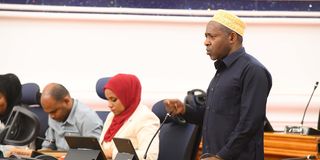
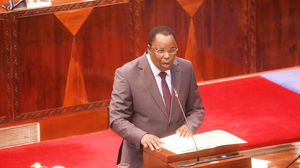
Ziwani Representative Mohamed Ali Salim (ACT Wazalendo) contributes to the main budget debate in the House at Chukwani, Unguja, Zanzibar. PHOTO | COURTESY
Unguja. Concerns over discrimination, equality and justice within the Union dominated debate on the Zanzibar main government’s budget in the House of Representatives on Tuesday, June 16, 2026.
During the debate, some lawmakers insisted that they would continue defending Zanzibar’s interests even if their views are perceived as discriminatory.
Contributors to the debate argued that if advocating for the interests of Zanzibaris is considered discrimination, then questions would inevitably arise about the future of the Union itself.
The Representative for Ziwani, Mr Mohamed Ali Salim, ACT-Wazalendo, said employment opportunities available in Zanzibar were increasingly being taken up by people from outside the Isles.
“Even the few jobs available are being taken by our colleagues from the other side. Yet when we raise the issue, it becomes controversial and people say we are opposing the Union. If defending employment opportunities for our youth threatens the Union, then let it break apart,” he said.
“As the Representative for Ziwani, I will continue defending and advocating for our youth. If this is the reason for the Union’s collapse, then let it collapse, because the jobs I am requesting are legitimate under the Zanzibar Constitution, even though different interpretations emerge," he added.
He noted that Union and non-Union matters are clearly defined, citing agriculture, tourism and transport as examples of non-Union sectors.
“So if we ask for employment opportunities and are accused of discrimination, then let the Union collapse. What matters is finding ways to provide jobs for Zanzibaris,” he said.
Women’s Representative, Ms Chumu Kombo Khamis, CCM, said the Union would endure because of the deep social and family ties linking people on both sides.
“The Union will be protected and will not die because we have relatives there, and people from Tanganyika are here and living their lives normally,” she said.
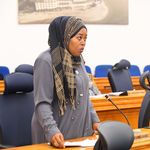
Another Women’s Representative, Dr Nasra Nassor Omar, ACT-Wazalendo, said concerns over employment opportunities in Zanzibar continue to resurface because they reflect realities facing many young people.
She argued that the budget contains significant gaps because it does not adequately reflect Zanzibar’s constitutional position within the Union, saying the matter should be viewed not only numerically, but also politically, economically and socially.
“This budget still contains many loopholes that force us to revisit these discussions repeatedly. The foundation of ensuring that the budget benefits citizens is missing because of the structure of the Union and the Constitution, which centralises many matters rather than devolving them,” she said.
Dr Omar added that her review of budget trends over the past four years suggests Zanzibar lacks sufficient autonomy within the Union framework because economic planning does not adequately assess how far the Isles can sustain themselves independently.
“We, the youth, were born seeing the Union, but we want to know how a young Zanzibari seeking employment, social welfare and social security can access those opportunities without being labelled discriminatory,” she said.
According to Dr Omar, discussions about employment opportunities for Zanzibaris are often wrongly portrayed as discriminatory.
“People from Tanganyika (Mainland Tanzania), have their place within the Union and Zanzibaris have theirs. But because the foundations of the Union are unclear, we now see confusion over which jobs belong to locals and which do not,” she said.
She argued that Tanzania Mainland also requires a clearly defined governance structure, similar to Zanzibar’s, to promote justice, equality, and mutual respect.
“The Union itself is not the problem. It is about creating one collective strength that helps the two countries that united to form Tanzania. Therefore, discussing the Union should not be viewed as promoting discrimination, but as ensuring that everyone is recognised and their rights protected,” she said.
Dr Omar added that government budgets should reflect Union priorities while clearly distinguishing matters relating specifically to Zanzibar and Tanzania Mainland.
“There is a lot of confusion because young people do not know their place within this Union. It has become an agenda for only certain groups,” she said.
“Today we stand to demand an inclusive budget that will allow us to know our boundaries, our rights, and where we stand in terms of equality, and balance within the Union we wish to preserve," added Dr Omar.
She further argued that the budget does not sufficiently address citizens’ ability to improve their livelihoods, claiming that a significant share of Zanzibar’s revenue linked to Union matters does not remain in Zanzibar.
“We want to discuss this openly, and the solution lies in obtaining a constitution that establishes a better governmental structure and clearly defines how Zanzibar and Tangmzania Mainland participate within the Union,” she said.
Debate over healthcare cards
Turning to the recent debate over health insurance cards, Dr Omar said the controversy reflects broader concerns surrounding social welfare and citizenship.
She argued that claims that local leaders, known as shehas, are responsible for improperly issuing Zanzibar Resident Identity Cards (ZAN IDs) are not entirely convincing, given longstanding allegations that such documents were issued to non-residents for electoral purposes.
“The issuance of Zanzibar Resident Identity Cards was politically motivated,” she said.
“People thought that lacking a ZAN ID would only prevent someone from voting, but those who received the cards for voting purposes are now the same people demanding healthcare cards. Therefore, it is not the fault of someone who came from outside Zanzibar seeking medical services. If you used them during elections, you should not now complain that healthcare cards were issued improperly,” she added.
Dr Omar appeared to be responding to recent remarks by Acting Health Minister, Dr Saada Mkuya, who told the House that although the government intends to provide free healthcare cards to Zanzibaris, some non-Zanzibaris have also obtained them.
According to Dr Mkuya, some dishonest officials have issued Zanzibar Resident Identity Cards to non-Zanzibaris, enabling them to access healthcare cards at the expense of eligible residents.
“Healthcare cards are issued to holders of Zanzibar Resident Identity Cards, and those cards are intended for Zanzibaris. However, some people who are not Zanzibaris possess healthcare cards, meaning they obtained resident identity cards through local leaders. This is unacceptable because the government budget is limited and cannot serve everyone,” she said.
The remarks sparked debate on social media, with some users describing them as discriminatory.
Another statement that generated discussion came from Deputy Minister for Youth, Employment and Empowerment, Mr Hassan Khamis Hafidh, who said Zanzibar needed an employment “revolution” to ensure local jobs are filled by indigenous Zanzibaris.
While debating his ministry’s budget, Mr Hafidh said there are more than 1,000 hotels in Zanzibar, yet many employees are not Zanzibaris.
He cited one hotel, which he did not name, where only 27 of 157 employees were Zanzibaris.
However, he also urged representatives to help change the mindset of young Zanzibaris, arguing that many focus only on government jobs and positions in the security forces, causing them to overlook opportunities in other sectors.
Register to begin your journey to our premium contentSubscribe for full access to premium content