Dodoma/Arusha. Prime Minister Dr Mwigulu Nchemba has assured the National Assembly that Tanzania remains free from the Ebola Virus Disease (EVD), even as authorities intensify border surveillance and public education to prevent possible importation of the virus.
The government said it remains on high alert due to active outbreaks of the Bundibugyo strain in the Democratic Republic of Congo (DRC) and Uganda, which continue to pose a regional risk because of frequent cross-border movement linked to trade, tourism, and social interaction.
At the same time, the East African Community (EAC) has moved to strengthen its coordinated response by establishing a Regional Technical Task Force to monitor outbreaks and harmonise preparedness measures across partner states.
Meeting in Arusha, the EAC Sectoral Council of Ministers of Health agreed on a unified strategy, including standardised surveillance and preventive measures at airports, seaports, and land borders.
Addressing Parliament in Dodoma yesterday, Dr Nchemba confirmed that Tanzania had not recorded any Ebola cases despite outbreaks in neighbouring countries.
Responding to a question from Special Seats MP, Ms Asha Salum Motto, he said: “We are safe and have not recorded any Ebola case. We thank God for this.”
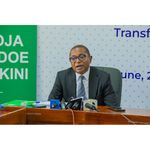
Prime Minister Mwigulu Nchemba speaking while responding to oral questions in Parliament in Dodoma
However, the Prime Minister cautioned that Tanzania’s role as a regional trade and travel hub requires constant vigilance, noting that high cross-border movement increases the risk of disease importation if preventive measures are weak.
“We must take precautions, educate one another and comply with screening procedures. Do not hide symptoms or information that could assist health experts,” he said.
He added that the Ministry of Health, under Minister Mohammed Mchengerwa, is closely monitoring regional developments and issuing regular updates as part of national preparedness efforts.
Health authorities say the alert is necessary given the scale of outbreaks in neighbouring countries.
As of June 1, 2026, the DRC had reported 121 confirmed cases and 1,077 suspected cases, with 17 confirmed deaths and 246 suspected deaths.
Uganda has recorded 11 confirmed cases and one death, with 638 contacts under monitoring.
On the ground, preventive measures have been stepped up in border areas. In Kyela District, Mbeya Region, traders at Kasumulu border post say screening procedures have increased.
Trader Kenedy Msaula, said health officers were actively guiding cross-border traders on preventive measures.
“We are being guided well because many traders lack full knowledge of the disease. We must follow advice given the infections in neighbouring countries,” he said.
Mbeya Regional Medical Officer, Dr Elizabeth Nyema, confirmed that health teams, working with immigration and security agencies, are conducting intensified screening of travellers at entry points.
She said the measures also include public education on handwashing, avoiding large gatherings and improving hygiene in public facilities, including guesthouses.
EAC moves to coordinate regional response
While countries reinforce national measures, the EAC has agreed to establish a formal regional mechanism to coordinate Ebola preparedness and response.
Following the 8th Extraordinary Meeting of the EAC Sectoral Council of Ministers of Health held in Arusha on June 1 and 2, member states agreed to set up a Regional Technical Task Force.
The task force will comprise experts from partner states and the EAC Secretariat and is mandated to coordinate technical response, monitor outbreaks and assess epidemiological trends.
Each member state has been directed to nominate two technical experts from the Ministry of Health and one from the Ministry of EAC Affairs.
The council also called for harmonised surveillance at airports, seaports, and land borders to ensure a consistent regional response.
According to the EAC Secretariat, ministers agreed to “harmonise Ebola surveillance and preventive measures at airports, ports, and border entry points across all EAC partner states.”
The Secretariat has been tasked with mobilising resources for enhanced screening systems, water, sanitation and hygiene (WASH) programmes, and community-based surveillance.
It will also work with the Civil Aviation Safety and Security Oversight Agency to standardise traveller health declaration forms and screening procedures.
In addition, partner states were directed to maintain deployment of EAC mobile laboratories in high-risk areas to speed up diagnosis.
Currently, 10 mobile laboratories are operating across the region, including in Tanzania, Kenya, Rwanda and the DRC.
The units are funded by the German government through KfW Development Bank, with technical support from the Bernhard Nocht Institute for Tropical Medicine.
The EAC said the coordinated measures aim not only to address the current Ebola threat but also to strengthen preparedness for future outbreaks.
Reported by Herieth Makwetta (Dar), Sadam Sadick (Mbeya) and Bertha Ismail (Arusha).
Register to begin your journey to our premium contentSubscribe for full access to premium content