Uzbekistan. Tanzania has called for increased climate adaptation financing and stronger support for vulnerable developing countries as the 8th Global Environment Facility (GEF) Assembly concluded in Samarkand, Uzbekistan, with global leaders warning that time is running out to meet environmental targets by 2030.
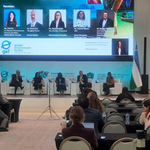
The week-long gathering started on June 01, 2026, and brought together 2,378 representatives from 168 countries to discuss solutions to climate change, biodiversity loss and pollution, collectively known as the triple planetary crisis.
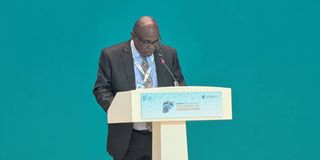
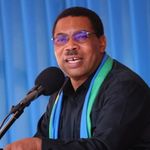
Speaking on behalf of the United Republic of Tanzania, the Minister of State in the Second Vice President’s Office of the Revolutionary Government of Zanzibar, Hamza Hassan Juma, said climate adaptation remains a matter of survival for developing countries, particularly those in Africa.
“For developing countries, climate adaptation is not a choice but a matter of survival,” he said, while welcoming the launch of the ninth replenishment cycle of the GEF, which secured approximately $3.9 billion (Sh9.9 trillion) in new pledges from donor countries.
Mr Juma said Tanzania appreciates recent reforms introduced by the GEF, including simplified project procedures and faster access to funding, which have helped countries implement environmental projects more efficiently.
“As one of the beneficiary countries of the GEF, Tanzania welcomes such improvements to enhance flexibility, easy access to funds, and timely execution of projects,” he said.
Tanzania has been allocated $33.5 million (Sh87.1 billion) under the GEF-8 cycle and an additional $20 million (Sh52 billion) from the Least Developed Countries Fund (LDCF). According to Mr Juma, the country has already secured approvals for its entire allocation.
The minister noted that the Assembly was taking place at a critical moment as the world approaches 2030, the deadline for several global environmental and sustainable development commitments.
He urged the international community to intensify efforts to reverse biodiversity loss, strengthen climate resilience and accelerate environmental recovery.
A major focus of discussions throughout the Assembly was the growing gap between adaptation needs and available financing.
Tanzania cited findings from the Adaptation Gap Report 2025 showing that developing countries require an estimated $365 billion annually to implement climate adaptation measures, while current financial flows remain far below that level.
“Tanzania emphasizes that adaptation should remain a cross-cutting priority across all GEF-9 interventions,” Mr Juma said.
He also called for greater investment in technology transfer, innovation, ecosystem-based approaches and locally led adaptation initiatives.
The country further appealed for additional resources to support vulnerable nations that contribute the least to global greenhouse gas emissions but suffer the most severe climate impacts.
Beyond public financing, delegates discussed the growing role of private sector investment in addressing environmental challenges.
Valerie Hickey, Director for Environment at the World Bank Group, said, “the GEF can play a critical role in helping governments establish regulations and policy frameworks that reduce investment risks and attract private capital.”
She advocated what she described as a “Goldilocks blend” of concessional and commercial finance, where public funding helps absorb risks while maintaining commercially viable investments capable of generating measurable environmental benefits.
The Assembly also highlighted the need for governments to align environmental, economic and development policies to achieve lasting results.
In his closing remarks, Interim GEF Chief Executive Officer and Chairperson Claude Gascon said the world already possesses the knowledge, evidence and solutions needed to address environmental challenges.
“What we need now is the collective determination to act with greater speed, greater coherence, and greater ambition than ever before,” he said.
Mr Gascon stressed that environmental protection should no longer be treated as a separate policy area but as the foundation of economic resilience, food security, public health and sustainable development.
He called for continued public development assistance, stronger policy coherence among governments, greater participation by the private sector and a whole-of-society approach involving communities, women, youth, scientists, farmers and civil society organizations.
“The last sprint to 2030 has begun. Let us act with urgency and with purpose,” he said.
As delegates departed Samarkand, the message emerging from the Assembly was clear: achieving global climate and environmental goals will require not only more funding, but also stronger partnerships, better policies and faster implementation.
For Tanzania and many other developing countries, securing adequate adaptation finance remains one of the most urgent priorities in the coming years.
This story was produced as part of a reporting fellowship to the Eighth GEF Assembly supported by Internews’ Earth Journalism Network.